Jiu-Jitsu gives you a rare combo: you learn practical skills you can feel working, and your fitness improves almost as a side effect.
Most adults walk into their first Jiu-Jitsu class with two quiet questions: Will I be totally lost, and will I actually stick with it? We get it, because starting something new as an adult takes a different kind of courage than it did at 16. The good news is that Jiu-Jitsu is built for beginners when it is taught the right way: step by step, with clear goals and a culture that rewards consistency, not ego.
In Spokane Valley, staying active often means trails, weekend sports, and outdoor movement when the weather cooperates. Jiu-Jitsu fits that lifestyle because it builds real, usable fitness without relying on repetitive high-impact pounding. You train hard, but you also learn how to move smarter, breathe under pressure, and solve problems with technique instead of force.
What makes Jiu-Jitsu especially powerful is that confidence is not a pep talk. Confidence shows up after you feel your progress in your body: you escape a bad position, you remember a detail under stress, you get through a tough round without panicking. Those moments stack up fast, and your fitness tends to follow right behind.
Why Jiu-Jitsu creates real confidence, not temporary hype
Confidence from Jiu-Jitsu comes from proof. Every week, you run into a small challenge, you practice a solution, and you test it in a controlled way. That feedback loop is the whole point. You are not guessing whether you are improving, you can see it.
Skill-based confidence hits differently than motivation. Motivation can be loud for a day and gone the next. Skill is quieter, but it sticks. When you learn how leverage works, how posture changes everything, and how timing beats strength, you start trusting your ability to handle pressure, on and off the mats.
We also focus on emotional regulation as a practical skill. In training, your heart rate climbs, your breathing gets shallow, and your brain wants to rush. Over time, you learn to notice that and settle. That ability to stay calm while your body feels stressed carries over to work, family life, and tense conversations.
The beginner confidence timeline we see most often
Most adults notice changes in a predictable pattern. Everyone is different, but this is a realistic snapshot of what the early months can look like:
1. Weeks 1 to 2: You learn the room, the basic positions, and the etiquette, and you start realizing you can do hard things without being perfect at them.
2. Weeks 3 to 4: You remember more details, you stop holding your breath as much, and you have a few “Wait, that worked” moments.
3. Weeks 5 to 8: Your movement improves, you tap less from panic, and you begin making simple choices during sparring instead of reacting.
4. Month 2 and beyond: You start building a style, your cardio climbs, and confidence becomes more like a baseline than a spike.
That timeline matters because it keeps expectations honest. You do not need to be “athletic” to start. You need a plan and the willingness to show up.
Fitness gains that feel functional, not like busywork
A lot of gym workouts build fitness in isolation: lift this, run that, repeat. Jiu-Jitsu is different because fitness is tied to a task. You push, pull, frame, bridge, shrimp, stand, and scramble, but you are doing it to solve a real problem. That makes it surprisingly engaging. You are too busy learning to notice you are getting in shape, and then you realize your jeans fit better and stairs feel easier.
Grappling is a high-intensity form of training that can improve strength, endurance, and cardiovascular health. Rounds force you to manage fatigue and keep thinking while your body wants to quit. That blend of physical output and decision-making is a big reason adult students feel better overall, not just “tired.”
For adults in Spokane Valley who want to stay active without beating up joints, Jiu-Jitsu can be a smart option. We spend time on positioning, safe movement, and pacing, so you can train hard while still protecting your body. You will sweat, you will work, but you are not required to absorb constant impact to get results.
What Jiu-Jitsu trains that most workouts miss
Here are a few fitness qualities we develop naturally in class:
• Grip and upper-body endurance that carries into daily tasks, from yard work to carrying gear.
• Core strength built through bracing, rotation, and controlled movement under pressure.
• Hip mobility and leg drive from bridging, standing up in base, and guard work.
• Cardio that improves because rounds demand repeated effort, recovery, and effort again.
• Coordination and balance that improve as you learn to move with another person, not just around equipment.
The best part is that it rarely feels random. Each class connects the physical effort to technique.
What makes adult Jiu-Jitsu beginner-friendly when it is taught right
Adult Jiu-Jitsu in Spokane Valley should feel approachable, not intimidating. We build classes around progressive skill development, meaning we do not toss you into chaos and hope you figure it out. We teach fundamentals, we repeat key patterns, and we explain why details matter.
A beginner-friendly environment is also about training partners. You should feel like you can ask a question without feeling awkward. You should be able to train safely with people who understand control. That is not accidental. It comes from clear coaching expectations and a culture that values learning over “winning” a round.
We also scale intensity. Some days you are ready to push. Other days you slept poorly, work was a lot, or your shoulders feel stiff. We would rather you train consistently for months than go too hard once and disappear for six weeks.
Your first class: what to expect so you can relax
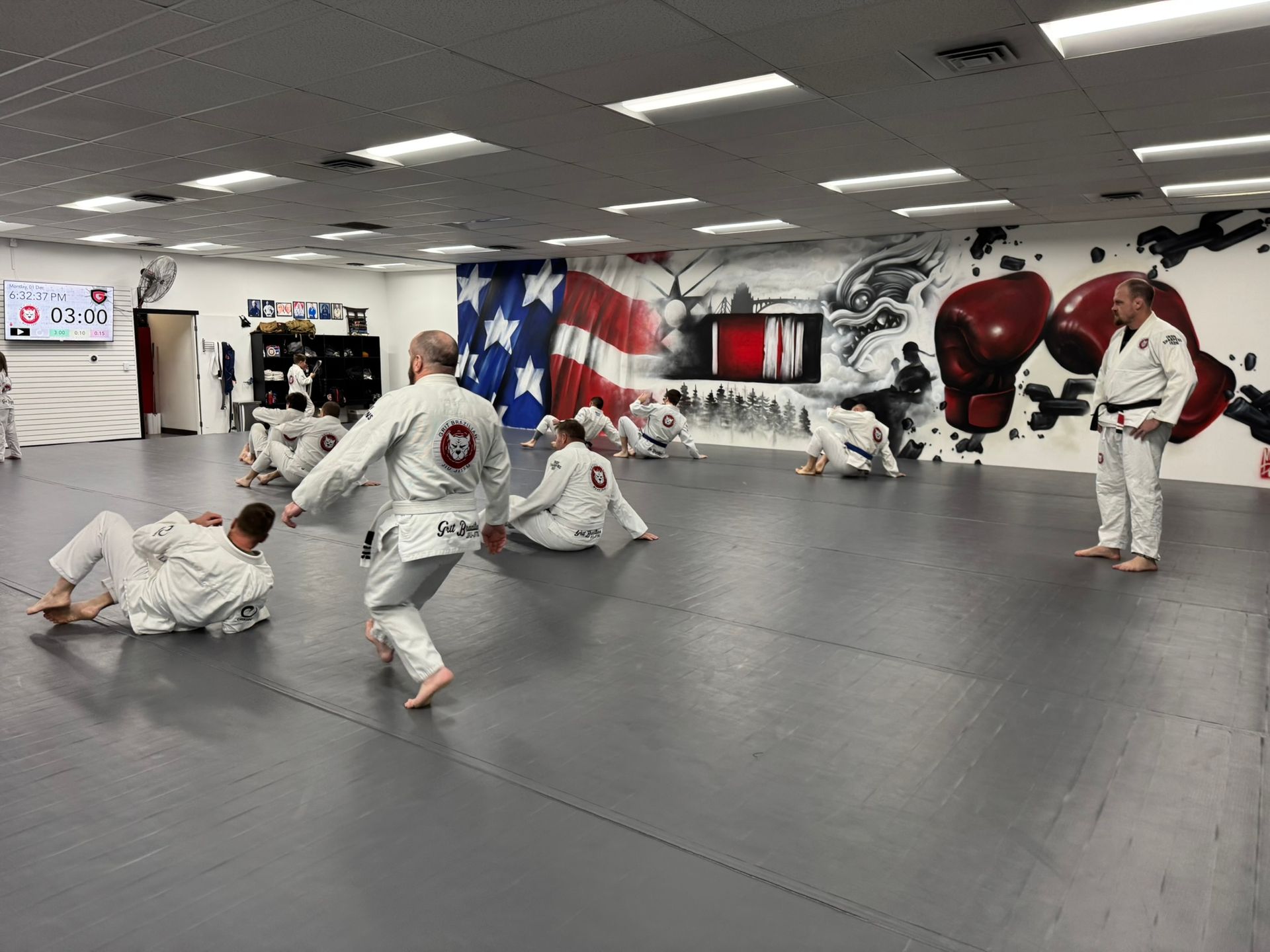
If you have never trained before, here is what usually surprises people in a good way: the class is structured. There is a warmup, there is instruction, there is drilling, and there is controlled practice. You are not expected to already know what to do.
A few practical notes help too. Bring water. Show up a little early so we can get you oriented. Wear something you can move in. If you are trying gi training, we can talk through gear options so you do not overthink it.
Confidence through self-defense skills you can actually apply
Self-defense is a common reason adults start Jiu-Jitsu, and it is also one of the biggest reasons confidence becomes real. You learn how to manage distance, grips, balance, and control. You learn what it feels like when someone is resisting, which matters because real situations are not choreographed.
We emphasize practical fundamentals: escaping bad positions, protecting yourself, and using technique to create space or control. That approach also supports conflict de-escalation because awareness and composure matter. When you feel less threatened, you make better decisions.
Jiu-Jitsu is also used in professional training contexts because controlling someone without escalating damage can reduce injury risks in high-stress encounters. That same principle helps everyday adults: control first, then options. It is a calm way to think, and it is a calm way to move.
Stress relief that comes from focused effort
Jiu-Jitsu is one of the few activities where your mind cannot wander much. If your brain tries to replay emails or tomorrow’s schedule, you usually get swept, pinned, or submitted. That sounds intense, but it is part of why stress drops. Training demands full attention, and for many adults, that is rare.
You also get a clean sense of completion after class. You worked, you learned, and you handled discomfort without quitting. That does something for your mood. Over time, many students notice better sleep, more patience, and a steadier emotional baseline.
There is also something simple and human about it: you train with other people who are showing up to improve. Spokane Valley has a strong community feel, and a consistent training group can become one of the healthiest parts of your week.
How our coaching approach supports progress and safety
Our instructors focus on clear, repeatable instruction and a training environment that makes improvement predictable. Certification, experience, and continuing development matter in martial arts, because quality coaching reduces avoidable injuries and keeps the learning curve smoother.
We also teach you how to train. That includes how to tap, how to communicate, how to choose appropriate intensity, and how to be a good partner. Those habits protect you and everyone else, and they keep the room welcoming for true beginners.
When you combine technical coaching with a structured class flow, you get something powerful: you can measure progress. You will feel it in your cardio, you will see it in your escapes, and you will notice it when stressful situations outside the gym feel a little less sharp.
Jiu-Jitsu in Spokane Valley: fitting training into real adult life
Most adults juggle a lot: work, family, appointments, and the kind of unexpected days that blow up a schedule. That is why we keep our class schedule practical, with options that support consistency. If you can train two to three times a week, you can build momentum. If you can only train once some weeks, we help you make that session count.
We also keep the experience grounded. Progress is not about being the toughest person in the room. Progress is about stacking good weeks. You learn a few details, you improve a position, you last longer in a round, you recover faster between rounds. That is how confidence and fitness build together.
If you are searching specifically for adult Jiu-Jitsu in Spokane Valley, you are probably looking for something that feels worth your time. We design training so you leave class feeling challenged, not crushed, and capable, not confused.
Take the Next Step
If you want confidence you can feel and fitness that shows up in everyday life, we are ready to help you start with a plan that makes sense. At Grit Jiu-Jitsu & Muay Thai Martial Arts, our Jiu-Jitsu training is built around progressive skill mastery, safe intensity, and a community that supports consistent improvement.
Whether your goal is practical self-defense, better conditioning, or simply proving to yourself that you can learn something hard, we will meet you where you are and guide you forward one class at a time at Grit Jiu-Jitsu & Muay Thai Martial Arts.
Curious about Jiu-Jitsu training? Join a class at Grit Jiu-Jitsu & Muay Thai Martial Arts and learn from the ground up.