Youth Jiu-Jitsu turns healthy movement into better focus, calmer choices, and stronger confidence you can actually see at home.
Kids do not need another activity that drains you, clutters the calendar, and leaves your child bored after two weeks. What most Spokane Valley families want is something that feels constructive, safe, and genuinely good for the brain and body. That is exactly why Youth Jiu-Jitsu has become such a smart choice for school age kids.
We teach Youth Jiu-Jitsu as a blend of movement, problem solving, and positive challenge. It is not just learning techniques, it is learning how to think under pressure, listen the first time, and keep trying when something feels hard. Those are life skills, but they are also brain skills, and there is real science behind how kids build them.
In this guide, we will break down what is happening in your child’s body and nervous system during training, why grappling is uniquely effective for youth development, and how our classes in Spokane Valley are structured so beginners can start with confidence.
Why Youth Jiu-Jitsu Trains the Brain Like a Sport and a Classroom Combined
When kids train, we are not only building muscles. We are building the brain’s ability to plan, focus, and adapt. Scientists call these skills executive function, and it includes things like working memory, impulse control, emotional regulation, and flexible thinking. In plain language, it is the part of your child that helps with homework, listening, and handling frustration without melting down.
Youth Jiu-Jitsu asks kids to solve physical puzzles in real time. Where should my hands go. How do I keep my balance. What happens if my partner moves this way. Every drill becomes a fast feedback loop: try, feel, adjust, repeat. That cycle is powerful for learning because kids are not just hearing instructions, they are embodying them.
We also use structure to support attention. Classes follow a consistent rhythm so kids know what is coming next. That predictability reduces anxiety, which often shows up as wiggling, zoning out, or acting silly. Once the nervous system feels safe, kids can actually learn.
Attention and listening get trained through meaningful constraints
A common parent question is whether Youth Jiu-Jitsu helps kids focus better in school. We cannot promise grades, but we can explain the mechanism. In class, kids have to listen for small details because details immediately matter. If they miss a cue about posture or hand position, the technique does not work. That immediate consequence is not punishment, it is information, and kids tend to lock in when the lesson feels real.
Over time, we often see kids get better at:
- Following multi step directions without checking out halfway through
- Waiting for the right moment instead of rushing
- Recovering after mistakes instead of quitting
- Staying engaged even when something is not instantly easy
Those are attention skills, just practiced in a way that feels like play.
Confidence grows from competence, not pep talks
Confidence is one of the most advertised benefits of martial arts, but it is worth saying plainly: real confidence comes from repeated proof. When your child learns to shrimp out of a pin, keep their balance, or escape a hold with good technique, that is evidence. Their brain starts to store a new story about who they are: someone who can figure things out.
Youth Jiu-Jitsu is especially effective here because progress is measurable. A child might not notice their own growth in general fitness, but they will notice when a technique that felt impossible last month suddenly works smoothly. That moment matters.
The Body Benefits: Coordination, Balance, and Strength Without “Brute Force”
Because jiu-jitsu is leverage based, kids do not need to be the biggest or strongest person in the room to succeed. That is one reason Youth Jiu-Jitsu tends to fit a wide range of personalities and body types. Energetic kids get a healthy outlet. Shy kids get a structured way to engage. Athletic kids get a deeper skill challenge. New kids get a clear starting point.
From a physical development standpoint, grappling builds what many sports miss: full body coordination close to the ground. Kids learn how to move their hips independently from their shoulders. They learn base, posture, and balance. They learn to fall and get up safely. Those are foundational movement skills that carry into everything else.
Mobility and joint control, taught in a kid friendly way
A good youth program does not treat kids like mini adults. We teach movement patterns that support growing bodies. Warmups are not random calisthenics, they are purposeful, like learning to bridge, roll, and move on the mat with control. This builds mobility and body awareness, which can reduce clumsiness and help prevent the kind of playground tumbles that happen when kids have no idea where their limbs are.
Cardio and conditioning that does not feel like “running laps”
Kids rarely love generic conditioning. They will do it, sure, but it is not sticky. Youth Jiu-Jitsu gets cardio in a more natural way through games, drilling, and short bursts of live practice that feel engaging. Your child is breathing hard because they are focused, not because an adult is yelling to run faster.
That difference is subtle, but it is why many families find jiu-jitsu easier to sustain through the school year.
Safety First: How We Keep Youth Jiu-Jitsu Kid Appropriate
Is jiu-jitsu safe for children. It is a fair question, especially if your only reference point is intense adult competition footage online. Our approach is different. Youth classes are controlled, coached, and designed around safety and learning.
We set clear rules around behavior, partner work, and intensity. We also match kids by age and size whenever possible, and we keep a close eye on the room. Most injuries in youth activities come from chaos and speed without supervision. Our goal is the opposite: structure, control, and calm repetition.
We also teach tapping early and often. Tapping is a safety skill. It teaches kids to recognize when they are stuck and communicate clearly. In a weird way, that is emotional regulation too: noticing stress and responding with a simple signal instead of panicking.
What a First Month of Youth Jiu-Jitsu Usually Looks Like
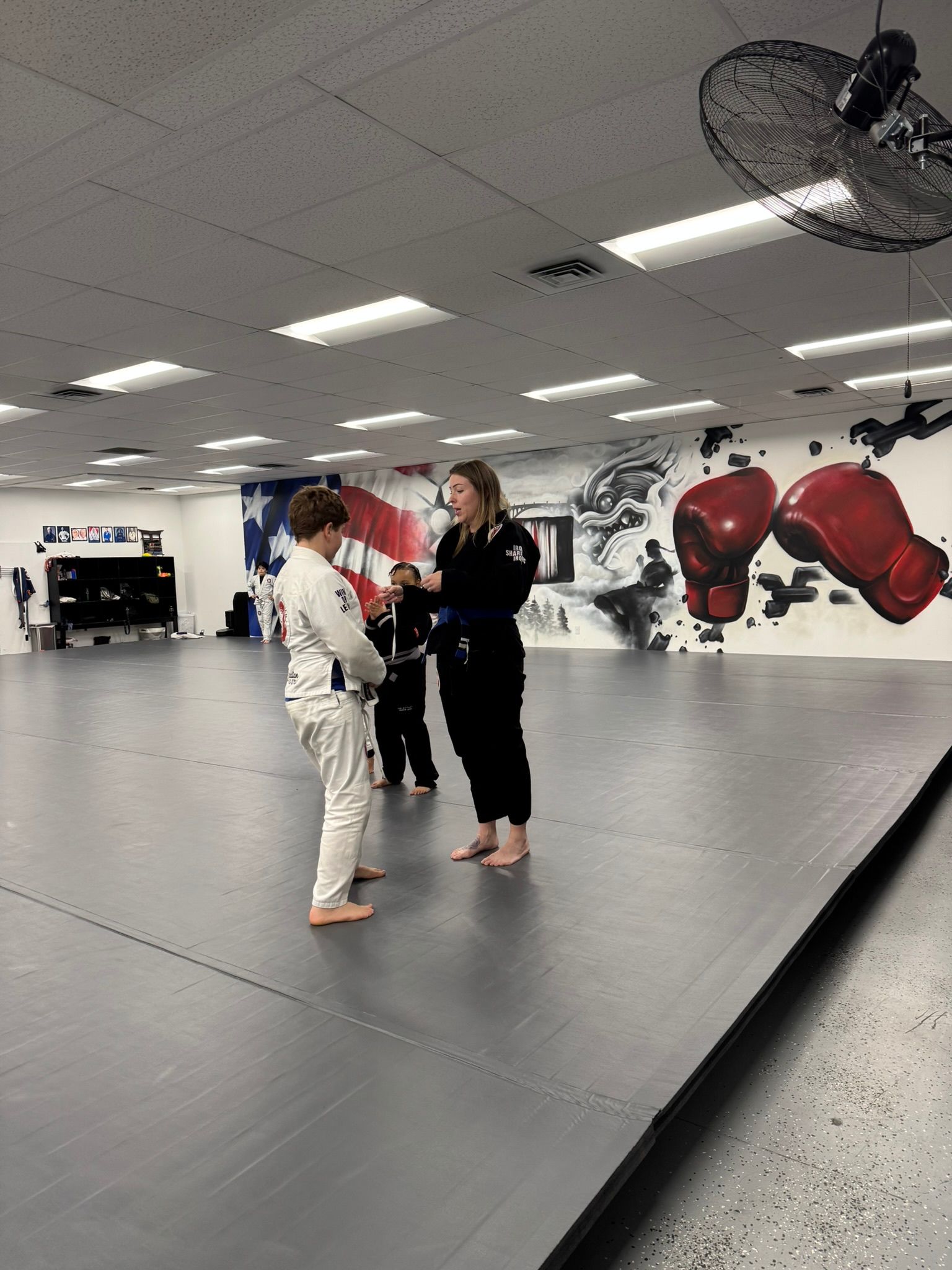
Starting something new can feel big, especially for kids who are nervous in groups. We keep the on ramp simple, and we build early wins into the process. Your child does not need to be “tough” to begin. We do not expect perfection. We expect effort, respect, and a willingness to try.
Here is a realistic first month progression we see again and again:
1. Week 1: Learning how class works, basic movement, and simple positions like guard and mount
2. Week 2: Adding one or two core escapes, plus partner drills that emphasize control
3. Week 3: Connecting movements into short sequences, like escape to stand up, or guard to sweep
4. Week 4: Building comfort with light, supervised sparring games where the goal is learning, not winning
By the end of the month, many parents notice a shift. Kids walk in more confidently. They understand routines. They know how to partner up. They start using jiu-jitsu language at home, which is honestly kind of fun to hear.
Anti Bullying Confidence: What Jiu-Jitsu Really Teaches
We take bullying concerns seriously, and we also try to talk about it realistically. Youth Jiu-Jitsu is not about encouraging kids to fight. It is about teaching them how to carry themselves with calm confidence and how to handle physical contact safely if a situation escalates.
A big part of bullying prevention is posture, eye contact, and boundaries. When kids feel physically capable, they often stop projecting “easy target” energy. That alone can change social dynamics at school.
In training, kids practice:
- Staying calm when someone is in their space
- Using technique rather than panic
- Getting up safely and creating distance
- Asking for help and communicating clearly with coaches and partners
Those habits support both self defense and emotional resilience.
Youth Jiu-Jitsu in Spokane Valley: Why Families Like the Structure
Spokane Valley families juggle sports seasons, school schedules, and screen time that creeps up fast. We get it. Youth Jiu-Jitsu in Spokane Valley works well as an after school activity because it is consistent and progressive. Kids are not just “burning energy.” They are building skills layer by layer.
We also find that the mat becomes a place where kids can reset. School can be stressful, even for young children. The combination of movement, coaching, and healthy challenge gives many kids a better outlet than sitting with big feelings alone.
If you are looking for Jiu-Jitsu in Spokane Valley that feels organized and child focused, our goal is to make it easy to start and easy to stick with, week after week.
Jiu-Jitsu vs Muay Thai for Kids: How We Think About the Fit
Both grappling and striking can be valuable, and we teach both. The difference is less about which art is “better” and more about what your child needs right now.
Youth Jiu-Jitsu tends to work especially well for kids who benefit from close contact problem solving, slower paced control, and lots of repetition. Because the goal is position and leverage, kids can train hard without relying on impact. That is appealing for parents who want a martial art that feels physical but still controlled.
Muay Thai can be a great fit for kids who love pads, rhythm, and striking basics with careful supervision. Some kids enjoy the clear cause and effect of hitting a pad correctly, and it can build coordination fast.
If you are not sure, we can help you choose a starting point based on age, temperament, and goals.
FAQ for Parents Considering Youth Jiu-Jitsu
What age can kids start jiu-jitsu?
Many kids can start around age 5, depending on maturity and ability to follow instructions. We will help you find the right class based on age and experience.
How often should my child train each week?
Two classes per week is a strong start for most beginners. One class can work, but progress feels slower. Three classes per week is great for kids who love it and recover well.
What should my child wear to the first class?
Comfortable athletic clothes are usually fine for a first visit. After you decide to continue, we will guide you on uniform details so your child can train safely and comfortably.
Is Youth Jiu-Jitsu in Spokane Valley beginner friendly?
Yes. We structure classes so new students can jump in without feeling behind. Our coaches demonstrate, guide, and correct in a way kids understand.
Will my child have to spar right away?
No. We introduce live training gradually. Early classes focus on movement, positions, and controlled partner drills so kids build confidence first.
Take the Next Step
If you want an activity that supports focus, confidence, and real athletic development, Youth Jiu-Jitsu is one of the most complete options you can give your child. The best part is that the benefits are not abstract. You see them in posture, patience, and the way your child handles challenges at school and at home.
At Grit Jiu-Jitsu & Muay Thai Martial Arts, we built our Youth Jiu-Jitsu in Spokane Valley program around structured progression, careful coaching, and a supportive environment where kids can work hard and feel proud of it. When you are ready, we would love to help your child take that first step onto the mat.
Help your child build confidence, discipline, and focus by enrolling them in youth martial arts classes at Grit Brazilian Jiu-Jitsu & Muay Thai.