Youth Jiu-Jitsu gives kids a place to build real confidence, one careful rep at a time.
Families in Spokane Valley have no shortage of activities competing for attention, energy, and time, and we get it: you want something that helps your child grow in ways you can actually see. Youth Jiu-Jitsu is one of the rare after school commitments that trains the body and the mind at the same time, without asking your kid to already be “athletic” or outgoing.
When you’re looking at Youth Jiu-Jitsu in Spokane Valley, the biggest question usually is not “Will my child learn self-defense?” It’s “Will this help my child handle real life better?” Our answer is yes, and the reason is simple: Jiu-Jitsu teaches problem-solving under pressure, respectful boundaries, and how to stay calm while working hard.
This guide breaks down what Youth Jiu-Jitsu is, what happens in class, how we keep training safe, and how you can tell it’s working during the first month, not just someday down the road.
What Youth Jiu-Jitsu Really Is (And Why It Clicks With Kids)
Youth Jiu-Jitsu is grappling based martial arts training built around control, leverage, and positioning. Instead of relying on size or strength, your child learns how to use balance, timing, and technique. That matters in Spokane Valley because kids’ bodies grow fast and unevenly. A program that rewards technique over raw power helps kids stay engaged even when growth spurts make everything feel awkward.
In practical terms, we teach children how to move safely on the ground, how to escape common holds, and how to control space with their hips, legs, and posture. Just as importantly, we teach when to stop, how to reset, and how to work with a partner. The partner piece is not a side detail. It’s the foundation.
Jiu-Jitsu in Spokane Valley is often talked about like it’s only about fighting. In our experience, the deeper value is that kids learn how to try, fail, adjust, and try again without melting down or checking out. That’s leadership training in a gi, whether your child is the loud, fearless type or the quiet kid who hangs back at first.
The Leadership Skills Kids Build on the Mat
Leadership is not only “being in charge.” For kids, leadership looks like self-control, responsibility, and the confidence to make good choices when nobody is watching. Youth Jiu-Jitsu develops those traits in a very grounded way because every class gives immediate feedback.
Here are a few leadership skills we see kids build through consistent training:
• Composure under pressure: When a partner is trying to hold position, your child learns to breathe, frame, and work the problem instead of panicking.
• Coachability: Kids practice listening once, trying once, and making small corrections without taking it personally.
• Respectful boundaries: Training includes clear rules about consent, control, and stopping immediately when asked.
• Persistence: Jiu-Jitsu is honest. Techniques don’t work if you rush, and that’s a good lesson for school and sports.
• Team mindset: Even though Jiu-Jitsu can be individual, our classes are built on partnership, rotating drills, and helping each other improve.
If your goal is a child who can advocate for themselves, regulate their emotions, and move through the world with steady confidence, Youth Jiu-Jitsu gives you a structured path to get there.
Bullying Prevention: What We Teach Kids to Do (And Not Do)
Parents ask about bullying a lot, and we take that seriously. Youth Jiu-Jitsu can help because it gives kids calm confidence and practical options, but we also make the boundaries clear. We don’t train kids to “win fights at school.” We train kids to avoid problems, defuse situations early, and protect themselves if they truly can’t get away.
In class, we focus on:
• Awareness and posture: Confident body language helps kids look less like an easy target.
• Distance management: Understanding space helps kids avoid getting grabbed or pushed around.
• Escapes and resets: Knowing how to break grips and get back to their feet is a big deal for real-world safety.
• Control, not revenge: The goal is to create safety and get to an adult, not to prove a point.
One of the underrated benefits is that children who train regularly often stop “broadcasting” insecurity. That doesn’t make your child arrogant. It just makes your child harder to intimidate.
Is Jiu-Jitsu Safe for Kids?
No sport is zero risk, but Youth Jiu-Jitsu can be coached in a way that’s remarkably safe and age-appropriate. We control intensity, teach tapping early, and build skills progressively. Safety is not a poster on the wall. It’s the way class is run, minute to minute.
We keep training safer by emphasizing:
• Age and size appropriate pairing whenever possible
• Clear rules about pressure, pace, and stopping instantly
• Technique first, strength last
• Supervised rounds with coaching, not chaos
• A culture where tapping is normal and respected
If you’re new to grappling, “rolling” can sound intense. In kids classes, rolling is structured. Think of it like supervised wrestling with more emphasis on control and learning positions, not just scrambling.
How Our Youth Classes Are Structured in Spokane Valley
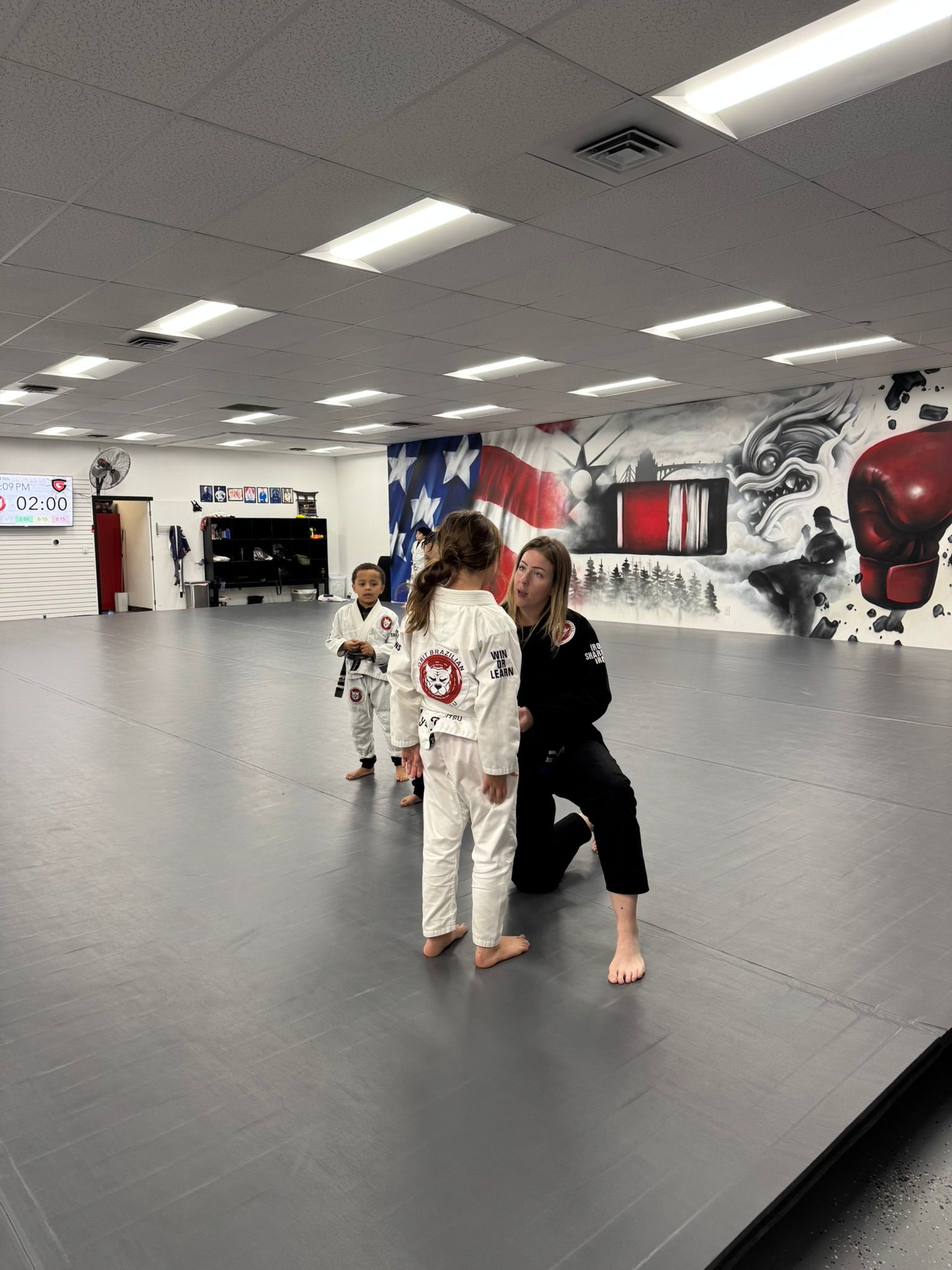
Parents deserve specifics. A good Youth Jiu-Jitsu class should look organized, not random. While each session can vary, our typical class rhythm stays familiar so kids know what to expect.
Warm-ups that actually matter
We use movement drills that build coordination: bear crawls, hip escapes, rolls, breakfalls, and balance work. It’s fitness, yes, but it’s also skill development. Kids learn how to fall safely and how to move their body as one connected unit.
Technique of the day
We teach one main theme, then layer it. For example, we might teach a guard position concept, an escape option, and a simple control follow-up. Kids learn faster when the pieces connect.
Partner drills
Drilling teaches timing and confidence. This is where kids learn how to be a good partner: steady base, safe hands, and controlled effort.
Supervised live practice
This is where Jiu-Jitsu becomes real. Kids try the skills with resistance, but under rules that keep the room safe and productive.
What Age Can My Child Start?
Most kids can start Youth Jiu-Jitsu as soon as we can reliably coach attention, safety, and basic movement. Age matters, but readiness matters more. Some children are ready earlier because they can follow instructions and handle structured partner work. Others benefit from waiting until focus and body awareness catch up.
If you’re unsure, we recommend starting with a trial class so we can place your child appropriately. Our goal is to set your child up for success, not throw your child into a group that feels overwhelming.
How Often Should Kids Train Each Week?
For most families, two classes per week is the sweet spot for steady improvement without burnout. One class can work if schedules are tight, but progress tends to feel slower. Three classes per week is excellent for kids who love it and recover well.
Here’s a simple way to think about it:
1. Week 1-2: Your child is learning rules, names, and movement basics. Consistency matters more than intensity.
2. Week 3-4: Techniques start to stick, and your child begins using them during live practice.
3. Month 2 and beyond: Confidence jumps because your child can predict positions and make choices instead of guessing.
If you want Youth Jiu-Jitsu to translate into better posture, calmer reactions, and improved self-control, frequency helps. It’s like learning an instrument. A little more repetition goes a long way.
What to Wear to the First Class
You don’t need fancy gear to start. We’ll guide you based on whether your child is training in gi, no-gi, or a mix. For a first class, comfortable athletic clothing that allows movement is usually enough, and we’ll explain next steps after you see how the class runs.
A couple of practical tips that make day one smoother:
• Trim fingernails and toenails
• Bring water
• Arrive a bit early so your child can settle in
• Let us know about any injuries or sensory concerns
Kids tend to relax quickly once they realize the room is structured and the expectations are clear.
For Shy Kids, High-Energy Kids, and Kids Who “Don’t Like Team Sports”
One reason Youth Jiu-Jitsu works so well is that it meets kids where they are.
If your child is shy, the class gives predictable structure. Your child doesn’t have to perform for a crowd. Progress happens through small wins, like remembering a grip or escaping a hold. Over time, shy kids often become quietly confident, and it shows up in school presentations, social situations, and posture walking into a room.
If your child has big energy, Jiu-Jitsu gives that energy a job. Instead of “stop moving,” we coach “move with purpose.” We teach kids how to channel intensity into technique and control, which is a life skill that keeps paying dividends.
If your child doesn’t connect with typical team sports, Jiu-Jitsu can be a relief. There’s no waiting for someone else to pass the ball. Your child is always participating, always learning, and always building personal responsibility, while still being part of a team environment.
How You’ll Know It’s Working (Even Before a Stripe or Promotion)
Parents often expect progress to look like a belt promotion. That can matter, but the earliest changes are usually behavioral, and you’ll notice them at home.
Look for signs like:
• Better listening and quicker responses to instructions
• Improved patience with siblings and classmates
• More comfort with healthy physical contact like handshakes and sports play
• Stronger posture and calmer eye contact
• A new willingness to try hard things without quitting fast
Youth Jiu-Jitsu is a long game, but the first wins are often small and immediate. We love watching parents realize, “Wait, my kid is handling frustration differently now.” That’s the moment things start to click.
Is Competition Required?
No. Competition can be a valuable goal for some kids, but it’s not the goal for every child or every family. Our priority is skill, confidence, and character development. If your child wants to compete, we can guide preparation in a way that’s healthy and age-appropriate. If your child prefers training without tournaments, our program still delivers the benefits that brought you here.
Jiu-Jitsu and Muay Thai: When Grappling Is the Best Starting Point
Because Spokane Valley families often look for well-rounded martial arts training, it’s worth explaining how we think about skill development. For many younger kids, grappling is a strong foundation because it emphasizes control, balance, and safe intensity. Kids can train hard while still learning to protect partners and respect boundaries.
Striking skills can be introduced thoughtfully as kids mature, build coordination, and demonstrate consistent control. Our approach is to teach martial arts in a way that supports your child’s development stage, not force adult training into a kids class.
Take the Next Step
If you want your child to gain practical skills, confidence, and the kind of calm leadership that shows up at school and at home, we built our Youth Jiu-Jitsu program to deliver exactly that. Our classes are structured, coached closely, and designed to help kids grow through steady progress, not pressure.
When you’re ready, we’ll help you choose the right starting point, explain the class schedule clearly, and make the first month feel doable. At Grit Jiu-Jitsu & Muay Thai Martial Arts, we’re proud to coach Spokane Valley families who want more than just an activity, and we’d be glad to meet you and your child.
Take the first step toward stronger skills and confidence to start training at Grit Brazilian Jiu-Jitsu & Muay Thai today.