Youth Jiu-Jitsu turns competition into a skill your child can practice calmly, week after week, in a structured environment.
Healthy competition is one of those phrases parents hear all the time, but it can feel vague until you watch it happen. In Youth Jiu-Jitsu, competition is built into the learning process, but it is controlled, coached, and tied to clear expectations like respect, patience, and safety. Instead of pushing kids to chase wins, we teach them how to handle pressure and keep making good decisions when their heart rate goes up.
Here in Spokane Valley, families have plenty of after school activities to choose from, and martial arts keeps growing because it does more than burn energy. Youth Jiu-Jitsu gives kids a place to test themselves in a way that is challenging without being chaotic. It is individual progress with a team feel, and that mix matters for confidence.
In this guide, we will break down how Jiu-Jitsu in Spokane Valley supports healthy competition for kids, what “competing well” really means on the mats, and how you can tell if your child is ready for sparring or even a first tournament.
What “Healthy Competition” Actually Means for Kids
Healthy competition is not about turning every class into a tryout. It is about teaching your child to bring effort, stay respectful, and keep learning whether the round goes well or not. That’s a big deal, because many kids only see competition through a scoreboard lens.
In our Youth Jiu-Jitsu classes, competition is reframed as problem-solving. A partner gives realistic resistance, your child tries a technique, it works or it doesn’t, and we adjust. That cycle builds grit in a practical way. Kids learn that improvement is earned through repetition, not luck.
The healthiest competitive environments also teach boundaries. We set expectations about how to train with control, how to tap, and how to stop instantly when an instructor calls time. Those habits are what keep the room safe and what keep competition from turning into aggression.
The difference between healthy competition and over-competition
Over-competition shows up when kids feel they must win to belong. It can look like panicking during sparring, refusing to try new techniques because it risks “losing,” or melting down after a tough round. Our job is to coach the opposite response: curiosity, composure, and a steady return to fundamentals.
Healthy competition looks like a kid who can say, “That didn’t work,” take a breath, listen, and try again. That’s a life skill, not just a sports skill.
Why Youth Jiu-Jitsu Fits Spokane Valley Families
Spokane Valley has a dense cluster of youth martial arts programs, and that usually means parents are actively searching for structure, coaching, and a positive outlet. We see it every week: kids come in with big energy after school, and the mats give that energy somewhere productive to go.
Another reason Youth Jiu-Jitsu in Spokane Valley works well is that it is naturally scalable. A beginner can learn safe movement, posture, and basic positions without needing prior experience. A more experienced student can add timing, strategy, and conditioning. Everyone can be challenged without being thrown into a one-size-fits-all practice.
And for families who want self-defense values without constant head contact, grappling offers a clear path. We can teach distance, grips, balance, escapes, and control in a way that develops confidence and awareness while keeping intensity appropriate for kids.
How We Teach Kids to Compete Hard Without Losing Control
Competition in Jiu-Jitsu is physical, but the real training is often emotional. Kids have to deal with frustration, excitement, nerves, and sometimes embarrassment, all in about three minutes. That is exactly why the process is so valuable when it is coached well.
We build “compete with composure” into the class culture. That includes how we pair partners, how we talk about wins and losses, and how we correct behavior when a child is getting too rough or too discouraged.
Here are a few core skills that make competition healthy instead of stressful:
• Emotional regulation under pressure, like breathing, resetting, and listening even when tired
• Respectful intensity, so kids learn to train hard without trying to hurt anyone
• Coachability, because progress speeds up when your child can accept feedback calmly
• Accountability, since each student learns that effort and choices matter more than excuses
• Resilience, so a tough round becomes information, not a personal failure
Those points sound simple, but for kids, they are learned through repetition. A child who practices resetting after a mistake in class is more likely to reset after a hard day at school, too.
Age-Appropriate Training: Why It Matters for Confidence
Spokane Valley youth programs are commonly segmented by age for a reason. Kids develop balance, attention span, and emotional maturity in stages, and instruction should match that. In Youth Jiu-Jitsu, age-appropriate coaching is not just a convenience, it is a safety and confidence issue.
Younger kids need simple goals, shorter drills, and clear rules. Older kids can handle longer rounds, more technical detail, and deeper conversations about strategy and sportsmanship.
What a typical youth class structure looks like
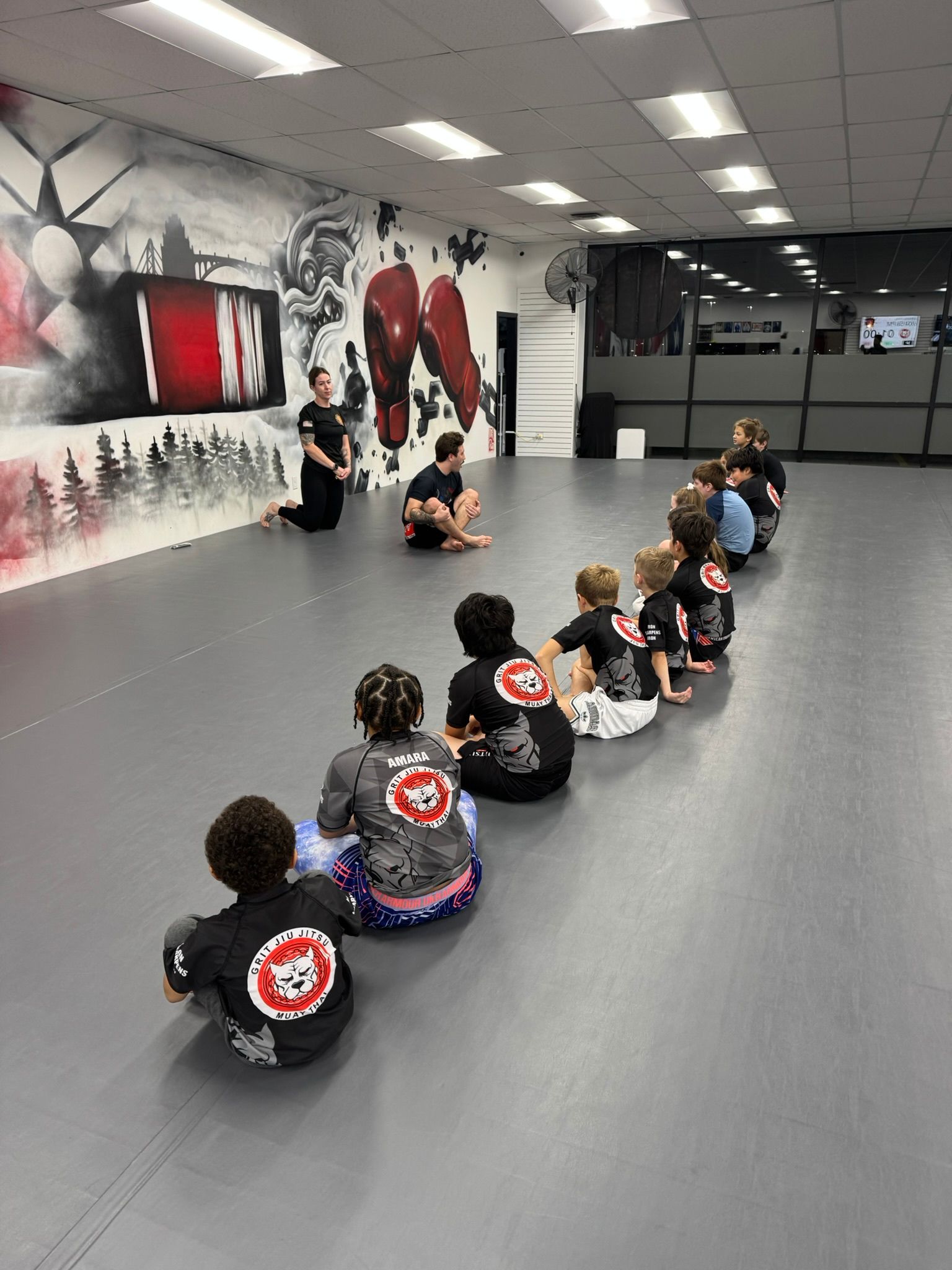
While class details vary by day, we keep a consistent rhythm so kids feel secure and know what is expected. Most classes include a warmup focused on movement skills, technique practice with a partner, and controlled live training that matches the group’s experience level.
That structure is part of healthy competition. If a child never trains live, competition feels shocking. If a child only trains live, learning can get sloppy and stressful. We aim for balance.
Safety and Trust: How Youth Jiu-Jitsu Stays Kid-Friendly
“Is it safe?” is the most common parent question, and it deserves a real answer. Youth Jiu-Jitsu is a contact sport, so we take safety seriously through coaching, rules, and supervision. The goal is not to eliminate challenge. The goal is to keep challenge productive.
We emphasize tapping early, stopping immediately, and treating partners like teammates. We also teach positional control so kids learn how to stabilize themselves and others, instead of flailing and colliding.
You will also notice that beginner students are introduced to intensity gradually. A brand-new kid does not need a room full of chaos. Your child needs clear instruction, a steady pace, and partners chosen thoughtfully.
Healthy Competition Builds Confidence Without Feeding Ego
Confidence is not the same thing as hype. Real confidence shows up when a kid can walk into a new situation, stay calm, and do the basics well. Youth Jiu-Jitsu creates that kind of confidence because it is honest. Techniques either work or they don’t, and the feedback is immediate.
At the same time, we keep ego in check by reinforcing sportsmanship. We praise effort, smart decisions, and improvement, not just “winning.” When kids learn to value progress, they become harder to derail by a bad day.
This is also where bully-prevention benefits start to make sense. A child who can stay composed, set boundaries, and ask for help is less likely to be an easy target. And a child who learns respect on the mats is less likely to become the problem in the first place.
Recreational Training vs Tournament Prep: You Can Choose
Not every kid needs to compete, and we never treat competition as a requirement for belonging. Plenty of students train recreationally and still gain the best parts of Jiu-Jitsu in Spokane Valley: fitness, discipline, focus, and confidence.
For families who are curious about tournaments, we treat competition as an extension of training, not the purpose of training. The right time to consider a tournament is when your child can follow rules consistently, handle losing a round without spiraling, and stay safe with different partners.
Signs your child is ready for a first tournament
A first tournament should feel like an experiment, not a verdict. We usually look for a few readiness indicators:
1. Your child can perform basic positions and escapes with control, even when tired
2. Your child listens to coaching mid-round and can apply one simple instruction
3. Your child understands tapping and safety rules without reminders
4. Your child can win or lose a round in class and return to training with a steady attitude
5. Your child wants to try competing for personal growth, not to prove something
If those are in place, competition becomes a healthy challenge instead of a stress test.
Gi, No-Gi, and Muay Thai for Kids: How Parents Can Think About It
Parents often ask about the difference between gi and no-gi, and how striking arts fit into a youth program. The simplest explanation is that each format develops coordination and timing in a slightly different way.
Gi training uses grips and friction, which can slow things down and make control easier to understand. No-gi moves faster and emphasizes body positioning and balance. Both can support Youth Jiu-Jitsu development when coached at the right intensity.
For families also interested in Muay Thai, kids can develop athleticism, footwork, and coordination in a structured striking environment. That said, if your main goal is healthy competition with a non-striking base, grappling is often a comfortable starting point for new students.
How Often Should Kids Train to See Progress?
Consistency matters more than intensity. One class per week can help your child learn rules, movement, and basic confidence. Two classes per week usually creates noticeable improvement in coordination and technique retention. Three classes per week can accelerate progress for kids who enjoy training and recover well.
The best schedule is the one your family can sustain. Burnout usually happens when kids feel forced, rushed, or constantly evaluated. Healthy competition thrives when training is consistent, supportive, and realistic for your calendar.
A practical approach is to start with a manageable routine, then adjust once your child settles in. You can always check the class schedule to see what times fit school, homework, and downtime.
Questions Parents Ask About Youth Jiu-Jitsu in Spokane Valley
What age should my child start?
Many kids can start young if the class is designed for their developmental stage. What matters most is attention span, ability to follow directions, and comfort with partner drills.
Will my child get hurt?
No contact sport is zero-risk, but good coaching reduces risk significantly. We prioritize control, tapping, and progressive intensity so kids build skill before speed.
Will this help with confidence and bullying?
Yes, when confidence is built through real competence. Youth Jiu-Jitsu teaches posture, boundaries, and calm decision-making, which supports bully-prevention in a practical way.
What if my child is shy or nervous?
That is common. We keep the environment structured and welcoming, and many shy kids open up once they know the rules and routines.
Does my child have to compete?
No. Competition is optional. Our focus is long-term development, and tournaments are one path, not the path.
Take the Next Step
Healthy competition is something kids can learn, not something kids either “have” or “don’t have.” With the right coaching, Youth Jiu-Jitsu teaches Spokane Valley students how to try hard, stay respectful, and recover quickly when things get uncomfortable. Those are the exact skills that translate to school, friendships, and sports of every kind.
If you want a place where your child can train seriously without being pushed into pressure, we built our youth program to support both recreational growth and competition readiness. At Grit Jiu-Jitsu & Muay Thai Martial Arts, we keep the goal simple: help your child become more capable, more composed, and more confident, one class at a time.
Take what you learned here and apply it on the mats by joining a Brazilian Jiu-Jitsu class at Grit Brazilian Jiu-Jitsu & Muay Thai.