
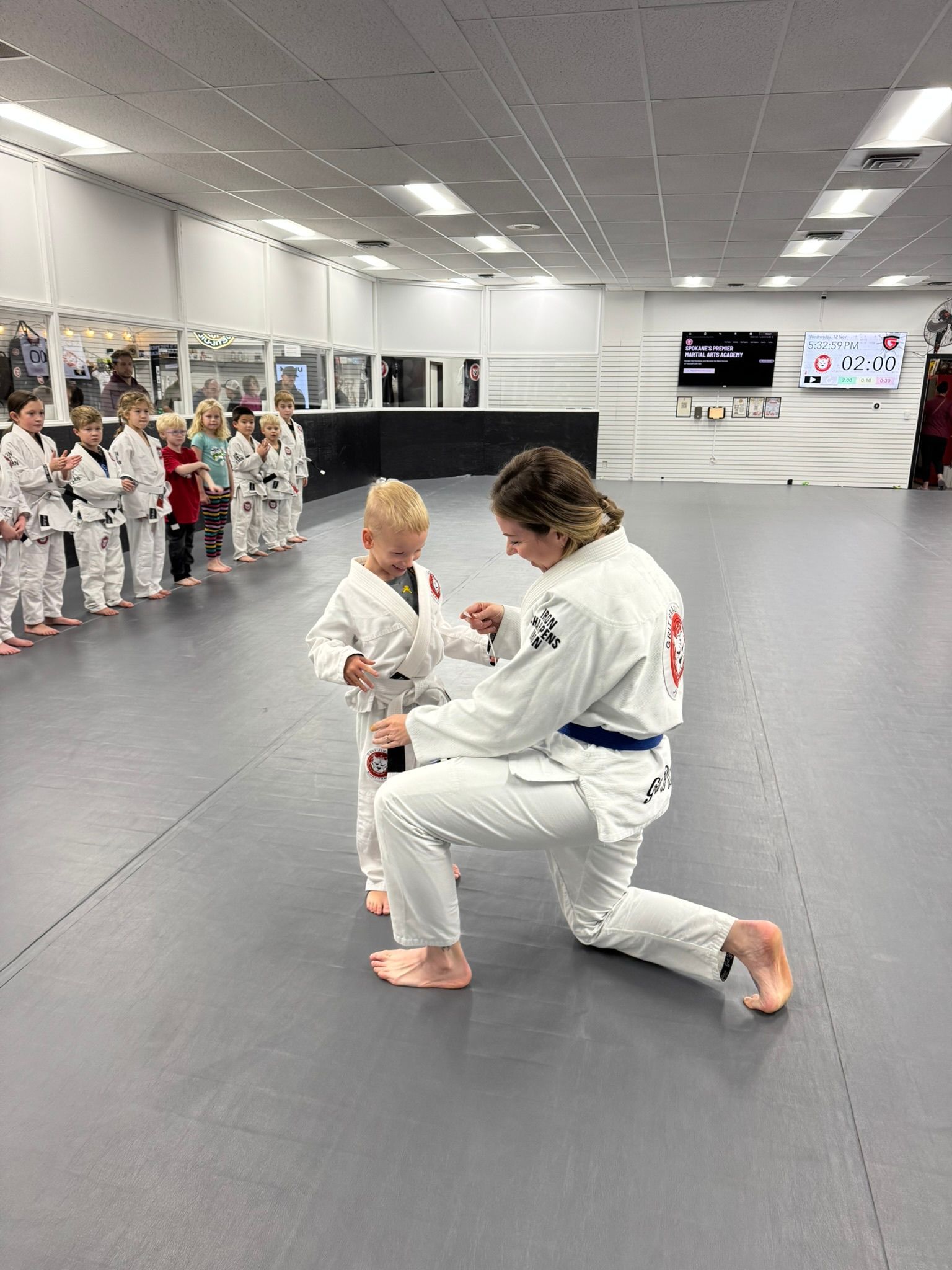
Youth Jiu-Jitsu gives kids a place to move, focus, and grow confidence in a way parents can actually see at home.
If you’re looking into Youth Jiu-Jitsu, you probably have two goals that matter more than anything else: you want your child to be safer and you want your child to be better equipped for life. In Spokane Valley, that often looks like finding an after-school routine that replaces screen time with structure, movement, and a positive peer group.
We also know parents are doing more homework than ever. Youth sports are evolving, martial arts are growing, and along with that growth, families are asking smarter questions about safety, coaching, and what progress should look like for different ages. That’s a good thing. Youth Jiu-Jitsu can be an incredible fit for kids, and it works best when it’s taught with patience, a clear curriculum, and age-appropriate intensity.
Why Youth Jiu-Jitsu fits Spokane Valley families
Spokane Valley has that classic family rhythm: school, homework, busy workdays, and the need for something consistent that kids can count on. Youth Jiu-Jitsu works well here because it’s a year-round indoor activity, it builds real skills, and it meets kids where they are, whether your child is energetic, shy, competitive, or still figuring out how to handle big emotions.
Parents often tell us they’re not just hunting for “an activity.” They want a routine that improves behavior, confidence, and follow-through. Youth Jiu-Jitsu is built around exactly those habits: listening, trying again after mistakes, and learning to stay calm under pressure.
From a wider research perspective, youth martial arts participation is rising, and reviews point to gains in balance, coordination, agility, strength, flexibility, cardiorespiratory fitness, mindfulness, self-control, and emotional resilience. Those outcomes line up with what families ask for most: better focus in school, more confidence socially, and healthier ways to burn off stress.
Hidden potential looks different in every kid
When people hear “potential,” it can sound like we’re only talking about athletic talent. We’re not. In Youth Jiu-Jitsu, hidden potential often shows up as small changes that stack up over time.
What parents notice first at home
A lot of progress shows up outside the mats, sometimes quietly:
• Better listening and faster “first-time” responses when you ask your child to do something
• More emotional control when frustration hits, like losing a game or getting corrected at school
• Stronger posture and body awareness, which sounds simple but affects confidence a lot
• Willingness to try again after mistakes instead of shutting down
• A calmer kind of confidence around peers, including with pushy personalities
Those shifts don’t come from speeches. They come from repetition: learning a technique, getting it wrong, adjusting, and trying again in a supportive environment.
What Youth Jiu-Jitsu teaches that carries into real life
Youth Jiu-Jitsu is often called “problem-solving with your body,” and that’s accurate. Kids are constantly making decisions: where to place their hands, how to keep balance, when to move, and when to pause. That thinking element is one reason parents ask about focus and emotional regulation, especially for kids who struggle with impulsivity or anxiety.
Confidence without aggression
Our goal is never to turn kids into bullies with skills. We focus on confidence paired with self-control. In practice, that means your child learns how to be assertive, set boundaries, and stay composed, not how to “win” every interaction.
Practical self-defense foundations
Jiu-Jitsu in Spokane Valley is popular partly because it’s realistic. Youth Jiu-Jitsu emphasizes leverage, positioning, and escapes. Kids learn what to do when someone is grabbing, pushing, or crowding them, and they learn to create space and get safe. We also reinforce the non-physical parts: awareness, using your voice, and getting an adult involved.
Is Youth Jiu-Jitsu safe for kids? A balanced, honest answer
Parents deserve a straightforward answer: grappling sports do carry injury risk. Pediatric Brazilian Jiu-Jitsu injuries have increased in recent years alongside the growth of the sport, with one large analysis showing a statistically significant upward trend from 2012 to 2021. In that analysis, the most common injuries were sprains and strains (28.3 percent) and fractures (20.1 percent), with the head, shoulder, and lower arm most affected.
That data matters, and we don’t brush it aside. Instead, we use it as a reminder that coaching quality, class structure, and supervision are not “nice extras.” They are the point.
How we reduce risk in Youth Jiu-Jitsu
We keep safety practical and consistent:
1. Age-appropriate drilling before live rounds so kids build control first
2. Clear rules on intensity, roughness, and what “playing tough” actually means
3. Constant emphasis on tapping early and respecting taps immediately
4. Close supervision and coaching that stops unsafe movement patterns early
5. Smart pairing so size, experience, and temperament are taken seriously
No sport can promise zero injuries. What we can do is run an organized program that prioritizes control, progressive learning, and a culture where kids don’t feel pressure to “prove something” by going too hard.
What age can kids start Jiu-Jitsu?
Most kids can begin Youth Jiu-Jitsu once they can follow simple instructions, stay with a group, and handle basic partner interaction. Age matters, but readiness matters more. Some children are ready earlier because they can listen and cooperate; others benefit from waiting until attention and emotional regulation are a little stronger.
If you’re unsure, we recommend starting with a simple goal: can your child participate safely and respectfully for the length of class? If yes, Youth Jiu-Jitsu is usually a great next step.
What a beginner week looks like in our program
Families often want logistics, not hype. Here’s what most first weeks look like when your child is new to Youth Jiu-Jitsu in Spokane Valley.
Day one: comfort and basics
We focus on making the environment feel predictable. Kids learn how to line up, how to move on the mats, and a couple of foundational movements that improve coordination. Nobody is expected to “know what to do.” That’s the whole point of being new.
Midweek: positions and simple goals
We introduce a position or two and tie it to a simple objective like “keep your balance,” “stay safe,” or “escape and create space.” Kids do better when success is clear and achievable.
End of week: controlled partner work
Partner drills are structured. If we include live training, it stays controlled and coached, with rules that fit the age group and experience level. A shy child can ease in. An energetic child learns to slow down and be technical.
How often should your child train each week?
Consistency beats intensity, especially for kids. For most families, two days per week is a strong starting point for Youth Jiu-Jitsu. It’s frequent enough to build momentum and keep skills fresh without making your schedule feel like a second full-time job.
Some kids love it and naturally want more mat time. That can be great, as long as recovery, school responsibilities, and overall stress stay balanced. A steady routine is what creates long-term progress.
Is competition required?
No. Competition is optional. Youth Jiu-Jitsu can be a developmental path with or without tournaments. Some kids thrive on the goal-setting and the “big day” experience. Others build confidence simply by training consistently, improving month to month, and enjoying the team atmosphere.
It’s also worth noting that Brazilian Jiu-Jitsu has a strong competition culture overall. A 2026 industry report noted that 43.6 percent of BJJ practitioners competed in the past two years, which suggests many families view it as a long-term activity. Still, your child can train seriously without ever competing, and we support both approaches.
Will Jiu-Jitsu help with bullying?
Youth Jiu-Jitsu can help in a few different ways, and the best results come from combining skills with mindset.
The physical part
Kids learn how to manage distance, grips, and control. That can reduce panic in uncomfortable moments and give your child options if someone gets physical.
The social part
Confidence changes body language. A child who stands taller, makes eye contact, and speaks clearly is less likely to be targeted repeatedly. That’s not a guarantee, but it’s a real pattern many parents recognize.
The emotional part
We coach kids to stay calm, make decisions, and de-escalate when possible. Youth Jiu-Jitsu is not about seeking fights. It’s about reducing helplessness.
Youth Jiu-Jitsu vs other activities: what’s different?
Every activity builds something valuable, but Youth Jiu-Jitsu has a specific combination that’s hard to replicate.
More individual feedback
Even in a group class, kids get a lot of personal correction because technique details matter. That can be huge for children who learn best with hands-on coaching.
Clear cause and effect
If posture is off, balance breaks. If grips are wrong, control disappears. Kids learn quickly that small choices create big outcomes, and that lesson carries into school and home routines.
A healthy way to handle pressure
In a safe training environment, kids experience manageable stress and learn how to regulate it. That’s one reason mental-health positioning is becoming more prominent in martial arts coverage, including anxiety management, focus, and emotional regulation.
What should your child wear to the first class?
Keep it simple. Comfortable athletic clothing is usually fine for a first visit, and we’ll guide you from there. The main goal is that your child can move freely and safely.
A few practical tips that help day one go smoothly:
• Bring water, and consider a small towel if your child tends to sweat
• Trim fingernails and toenails for comfort and safety
• Arrive a little early so your child can settle in without rushing
• Let us know about any past injuries so we can coach accordingly
What kind of instructor is best for beginners?
For kids, the best instructor is not the loudest or toughest. The best instructor is the one who can keep a room organized, explain clearly, and manage energy levels without turning class into chaos.
In Youth Jiu-Jitsu, we believe good coaching looks like structure and kindness at the same time. Kids should feel supported, but also held to clear standards: respect, self-control, and steady effort.
Take the Next Step
If you want a youth program that builds confidence, self-control, and practical skills, Youth Jiu-Jitsu can be the right fit, especially when it’s taught with safety and progress in mind. We’ve designed our kids’ training to help your child grow week by week, not just “get through class.”
When you’re ready, we’ll help you figure out the best starting point based on your child’s age, temperament, and goals. At Grit Jiu-Jitsu & Muay Thai Martial Arts, we keep the process clear, welcoming, and structured so your family can settle into a routine that lasts.
Take your Jiu-Jitsu knowledge beyond the blog and put it into practice at Grit Jiu-Jitsu & Muay Thai Martial Arts.