Youth Jiu-Jitsu gives kids a clear, calm way to protect their space without turning confidence into aggression.
Kids in Spokane Valley deal with a lot of “small” moments that don’t feel small to them - someone grabbing a backpack strap, getting crowded in line, unwanted teasing at recess, roughhousing that crosses the line, or a friend who won’t stop when asked. As parents, we want our kids to be kind, but we also want them to know how to say no and mean it. Youth Jiu-Jitsu is one of the most practical ways we’ve found to teach that balance.
In our Youth Jiu-Jitsu classes, boundary-setting isn’t a lecture. It’s built into the training: posture, distance, awareness, and controlled responses. Kids learn what personal space feels like, how to stay calm when someone pushes into it, and how to get free if someone won’t respect a clear “stop.”
When families search for Jiu-Jitsu in Spokane Valley, the goal is rarely “make my kid tougher.” Most of the time it’s simpler: help your child feel safer at school, speak up with confidence, and handle uncomfortable situations without escalating them. That’s the heart of what we teach.
What “boundaries” really mean for kids (and why it’s hard)
A boundary is just a limit that keeps your child physically and emotionally safe. For kids, the challenge is that boundaries can feel fuzzy. Some adults tell kids to “share” and “be polite,” then suddenly expect them to be firm when something is wrong. That’s confusing, even for confident children.
In Youth Jiu-Jitsu, we make boundaries concrete. Kids practice where their base is, how close is too close, and how to use their voice and body together. When a child learns, “I can move my feet, I can frame with my hands, I can create space,” the idea of boundaries stops being abstract.
We also treat boundaries as something you can set early. The best self-defense is often noticing the problem sooner, not fighting harder later. That’s a big shift for many kids, and it’s empowering in a calm way.
Why grappling is uniquely suited for teaching personal space
Striking arts can build confidence, but grappling has a special advantage for boundary training: it happens inside the “personal space bubble.” Jiu-jitsu literally teaches what to do when someone is too close. Kids learn to recognize pressure, grips, and body positioning, and then respond with control instead of panic.
Youth Jiu-Jitsu gives kids a safe place to practice uncomfortable situations with supervision, structure, and clear rules. The class environment matters here: we’re not letting kids “go wild.” We’re teaching them to stay measured, breathe, and problem-solve.
Over time, kids start to understand a key boundary skill: you can be firm without being mean. You can create distance without losing your cool. That’s a life skill, not just a sport skill.
The boundary skills we build in Youth Jiu-Jitsu (in plain English)
When you watch a kids class closely, you’ll notice boundary-setting everywhere. We coach it intentionally, using repeatable cues that kids can remember when emotions run high.
Here are the core skills that translate directly to school and social settings:
• Awareness of distance and positioning, so your child notices when someone is crowding or circling too close
• Calm assertiveness, including practicing a strong voice and clear words like “Stop” and “Back up”
• “Frames” and posture, which teach kids how to place hands and forearms safely to create space without striking
• Grip breaks and escape basics, so your child knows how to get free from common grabs like wrists, sleeves, or bear hugs
• Emotional control under pressure, because learning to breathe and think while someone is holding you changes everything
If you’ve ever seen a kid freeze when overwhelmed, you’ll understand why this matters. Youth Jiu-Jitsu trains the nervous system as much as it trains the body.
Saying “no” with confidence: how we coach verbal boundaries
Boundaries start with communication. We want kids to have permission to speak up early, not after something has already escalated. In class, we reinforce that your voice is a tool. It’s not rude to protect your space.
We coach kids to use short phrases and steady volume. Not yelling out of fear, not whispering and hoping it stops. A simple, practiced “Stop” paired with good posture is surprisingly effective, even outside the gym.
And we also teach a critical social skill: how to reset after a boundary moment. Sometimes kids worry that saying “stop” makes them a “bad friend.” We help them learn that respectful people accept boundaries, and that real confidence includes being clear.
Physical boundaries: posture, distance, and “getting off the tracks”
A lot of kid conflicts happen because children stand in the wrong place at the wrong time. That’s not blaming kids; it’s just reality. We teach practical movement: how to step off the line, keep balance, and avoid getting pinned against a wall or trapped in a corner.
In Youth Jiu-Jitsu in Spokane Valley, we focus heavily on posture and base. A strong stance makes a child harder to push, pull, or topple. But more importantly, it changes how a child feels internally. They look steadier, and they usually start acting steadier too.
We also teach that you don’t need to “win” a confrontation to set a boundary. Often the best outcome is creating space, getting to a safe adult, and moving on. That’s success.
Escaping grabs without “fighting”: the self-protection side of training
Parents often ask whether kids will learn real self-defense or “just sport moves.” Our answer is that we teach skills that work for real situations, taught in an age-appropriate way. For kids, that means focusing on escapes, control, and safety rather than aggression.
In class, kids learn how common grabs work and what makes them effective. Then we show them how to break grips using leverage, body positioning, and simple mechanics. The goal is not to punish someone. The goal is to get free.
That’s why Youth Jiu-Jitsu pairs so well with boundary-setting. It teaches kids: if words fail and someone keeps grabbing or crowding, you still have options that don’t require striking.
Staying calm under pressure: the underrated boundary superpower
When someone invades your space, the body reacts fast. Heart rate goes up. Breathing gets shallow. Kids may freeze, lash out, or start crying. None of that means your child is weak. It means your child is human.
One of the biggest benefits we see from consistent training is calmer decision-making. In controlled sparring and drills, kids learn what pressure feels like and how to respond step by step. They learn to breathe, look for openings, and keep working the problem.
This calm isn’t just useful in physical situations. It carries into social boundaries too, like dealing with teasing or peer pressure. A child who can stay steady is harder to push around.
Bully prevention vs self-defense: what we actually aim for
“Bully prevention” gets mentioned a lot in kids martial arts, and for good reason. Families want tools that reduce bullying risk, not just a plan for after something bad happens.
Our approach is simple: boundary-setting is preventative. A child who stands tall, uses a clear voice, and moves confidently often avoids being targeted in the first place. And if a situation becomes physical, we focus on control-based solutions and getting to safety.
We also talk about the difference between conflict and bullying in kid-friendly terms. Not every disagreement is bullying. But repeated boundary violations are a problem, and kids deserve a clear plan for what to do next.
What a first Youth Jiu-Jitsu class looks like for your child
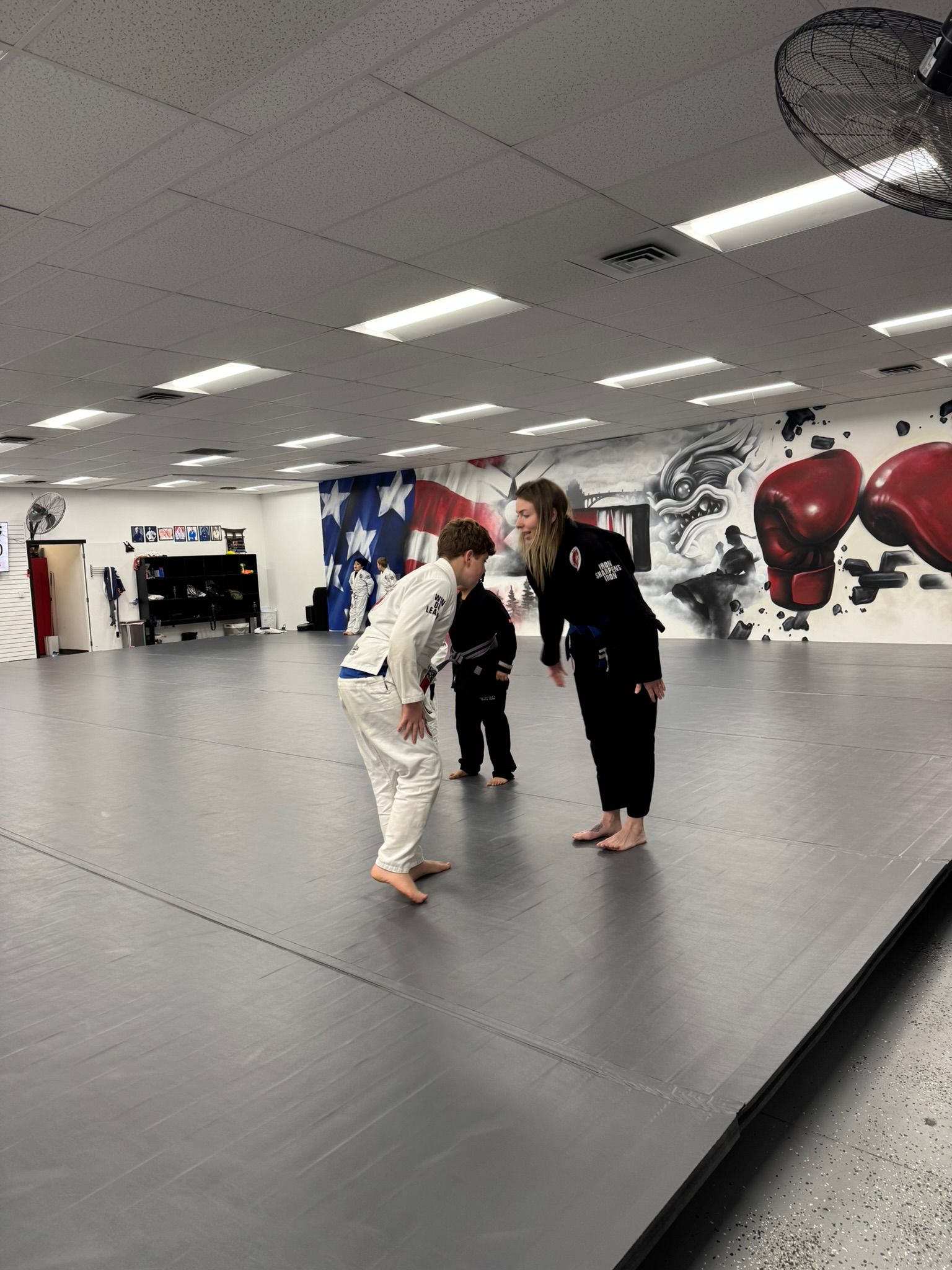
First classes should feel structured and welcoming, not intimidating. We keep kids moving, but we also keep instruction clear and repeatable. Expect a mix of basics, partner drills, and games that build athletic skills without turning class into chaos.
A typical first class includes:
1. A quick warm-up focused on safe movement: rolls, shrimping, balance, coordination
2. A short technique segment, usually a simple escape or control position
3. Partner practice with close supervision and frequent coaching
4. A controlled sparring round for kids who are ready, with safety rules emphasized
5. A brief wrap-up where we reinforce one lesson your child can remember
For what to wear, most kids start in comfortable athletic clothes. If your child has a gi, great, but it’s not required for day one unless the program notes specify it. Bring water, and arrive a few minutes early so your child can settle in.
How we keep Youth Jiu-Jitsu safe and age-appropriate
Safety is not an afterthought. It’s designed into how we teach. Youth Jiu-Jitsu works best when kids feel secure enough to try, make mistakes, and learn without fear of getting hurt or embarrassed.
We keep training safe by using structured progressions: kids learn fundamentals before intensity. We also match partners thoughtfully, coach tapping and stopping early, and maintain a respectful room culture. That culture matters, because boundaries start inside the gym. If kids can’t practice respect here, the lesson won’t transfer anywhere else.
If your child is shy or anxious, that’s not a dealbreaker. In fact, many quieter kids thrive in jiu-jitsu because progress is measured in small wins: a clean escape, a better stance, a calmer breath.
Why Youth Jiu-Jitsu in Spokane Valley fits real life outside the gym
Spokane Valley families are busy. School, sports, homework, and everything else add up. The reason Youth Jiu-Jitsu sticks for many kids is that it feels useful right away. Your child learns how to stand, how to speak, how to move, and how to stay composed.
And the benefits aren’t limited to “bully situations.” Boundaries show up everywhere: sharing space with siblings, handling rough play, navigating friendships, and managing frustration. Youth Jiu-Jitsu gives kids a place to practice those moments with coaching, repetition, and a clear set of expectations.
If you’re looking for Youth Jiu-Jitsu in Spokane Valley that builds confidence while keeping values like respect and self-control front and center, our program is designed for exactly that.
Ready to Begin
Building strong boundaries takes practice, not just good advice, and that’s why we built our youth program around repeatable skills kids can actually use. At Grit Jiu-Jitsu & Muay Thai Martial Arts, we teach children how to recognize personal space problems early, communicate clearly, and use control-based jiu-jitsu fundamentals when they truly need them.
If you want a program that supports confidence, discipline, and calm assertiveness, we’d love to help your child get started with Youth Jiu-Jitsu in Spokane Valley in a way that feels safe, structured, and genuinely encouraging.
Continue your martial arts journey beyond this article by joining a class at Grit Brazilian Jiu-Jitsu & Muay Thai.