
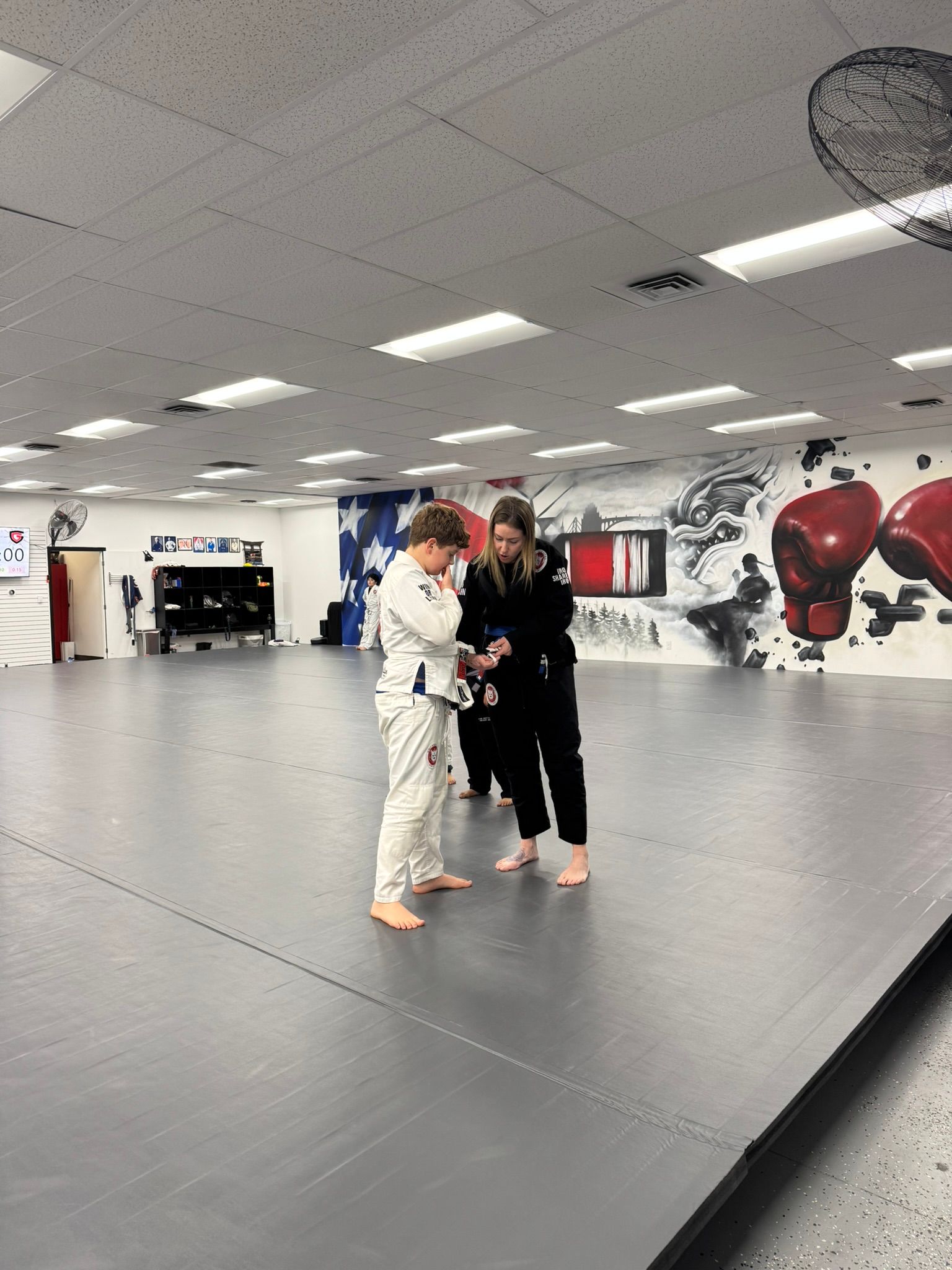
Youth Jiu-Jitsu turns “how was your day” into real conversations, shared goals, and wins your whole family can feel.
Families in Spokane Valley are busy, and most of us feel it week to week. Between school, work, chores, and screens that somehow multiply overnight, it can be tough to find an activity that helps your kid grow and also brings your household closer together. That is one reason so many parents look into Youth Jiu-Jitsu.
In our Youth Jiu-Jitsu program, we see something interesting happen when kids train consistently: the benefits do not stay on the mats. The confidence, respect, and self-control kids practice in class start showing up at home, and families get a shared language for effort, boundaries, and encouragement.
This article breaks down how Jiu-Jitsu in Spokane Valley can become more than an after-school activity. When you approach it the right way, Youth Jiu-Jitsu becomes a steady routine that strengthens communication, builds trust, and creates healthier family dynamics over time.
What Youth Jiu-Jitsu Teaches Beyond Self-Defense
It is easy to assume Jiu-Jitsu is mostly about learning to fight. We do teach practical self-defense fundamentals in an age-appropriate way, but the bigger story is the character development that comes with learning a challenging skill safely and consistently.
Confidence that comes from earned progress
Kids build confidence fastest when progress is real, measurable, and repeated. In Youth Jiu-Jitsu, your child learns positions, escapes, and simple problem-solving under pressure. When a kid realizes, “I can stay calm and work a plan,” it changes how your child walks into school, handles awkward social moments, and responds to criticism.
We keep that confidence grounded. Our goal is not bravado. It is quiet capability: knowing how to handle yourself, and knowing when to step away.
Respect and boundaries, practiced every class
Respect is not a speech. It is a habit. Partner-based training requires kids to listen, follow structure, and treat teammates with care. The small moments add up: waiting your turn, using controlled movement, acknowledging when you tapped, and learning that safety matters more than “winning.”
Those habits translate to home life in simple ways. Kids start hearing “pause” or “reset” and actually responding, because those words already mean something in training.
Emotional regulation and healthy energy release
Many Spokane Valley parents tell us the same thing in different words: “My kid has a lot of energy,” or “My kid gets overwhelmed fast.” Youth Jiu-Jitsu gives kids a safe place to move, focus, and learn how to settle their nervous system after effort.
Breathing, pacing, and learning to keep trying after a mistake are not just sports skills. Those are life skills, and they show up during homework frustration, sibling arguments, and morning routines.
How Youth Jiu-Jitsu Strengthens Family Bonds
Youth Jiu-Jitsu in Spokane Valley stands out as a family-bonding activity because it creates shared experiences you can build on at home. It also gives you consistent touchpoints for encouragement that feel specific, not generic.
You get a shared language around effort
When your child trains, you start hearing terms like “position,” “control,” “base,” and “escape.” More importantly, you start seeing what those words mean: patience, calm decision-making, and sticking with a hard task. That becomes a shortcut for family communication.
Instead of repeating, “Try harder,” you can say, “Work your way out step by step,” and your child knows exactly what you mean. Youth Jiu-Jitsu gives families phrases that are practical and non-judgmental, which can reduce arguing and defensiveness.
Partner training teaches trust and cooperation
Jiu-Jitsu is built on cooperation. Even when kids are sparring lightly, they are helping each other learn. That partner mindset tends to spill into home dynamics, especially between siblings. When kids understand that control matters and safety matters, roughhousing often gets less chaotic.
We also see kids become more comfortable asking for help. In class, it is normal to say, “Can we drill that again?” or “I did not get it.” That attitude can soften the “I do not care” wall many parents run into.
Families share wins that are not tied to screens
A big reason Youth Jiu-Jitsu supports bonding is that it creates real, tangible wins. Not “high score” wins, but “I did the hard thing” wins. You can celebrate effort without needing a trophy.
Here are a few shared wins families commonly notice after a few weeks of consistent training:
• Your child talks more clearly about challenges, because class normalizes problem-solving out loud.
• Bedtime and mornings run smoother, because training anchors the day with routine and physical outlet.
• Sibling conflict becomes easier to de-escalate, because kids practice control and resetting in class.
• Parents feel more connected to progress, because you can see skills building week by week.
• Kids become more coachable, because they are used to feedback that is specific and immediate.
Those wins make it easier to praise your child in a way that lands. “I noticed you stayed calm when it got frustrating” feels different than “Good job.”
Parents can train too, and that changes the dynamic
One of the most effective ways to strengthen family bonds is to share goals. When parents train, even just occasionally, kids see effort modeled in real time. It becomes normal in your home to be a beginner, to practice, and to keep showing up.
If you are curious about family training, we can help you match the right pace to your schedule. Some families like training on separate days. Others enjoy building a routine where everyone is in the gym at the same time, each in the appropriate class. Either way, the shared commitment matters.
Why Spokane Valley Families Are Choosing Martial Arts Right Now
Spokane Valley is full of active families, and we see a real demand for youth programs that focus on more than fitness. Parents want confidence, discipline, anti-bullying skills, and a safe environment that supports character development.
Youth Jiu-Jitsu in Spokane Valley fits that need because it combines structure with real engagement. Kids are not just running in circles. They are learning a skill that requires focus, coordination, and respectful physical contact in a controlled setting.
Convenience matters too. When your schedule is packed, the ability to get to class, train, and get home without a complicated plan is a big deal. Our class schedule is designed to support busy school nights, and we encourage families to build consistency without burning out.
What Families Often Notice After 30 Days
We like the 30-day window because it is long enough to build momentum, but short enough to feel achievable. Not every child changes in the same way, and we do not promise overnight transformations. Still, patterns show up.
After a month of Youth Jiu-Jitsu, many families report:
1. Better follow-through at home, because training reinforces listening and completing tasks in order.
2. More calm under pressure, especially when kids feel challenged socially or academically.
3. A healthier relationship with feedback, because corrections are normal and not personal.
4. Increased body awareness and coordination, which can boost confidence in other sports too.
5. More positive peer relationships, because teamwork is built into partner drills and class etiquette.
If you want this to translate to family bonding, the biggest driver is consistency. Showing up regularly is what turns skills into habits.
Parent FAQs About Youth Jiu-Jitsu in Spokane Valley
What age can kids start?
Age readiness depends on attention span, comfort with group instruction, and basic coordination. We can help you pick the right starting point based on your child, not just a number. If you are unsure, a trial class is usually the easiest way to find out.
Is Jiu-Jitsu safe for kids and beginners?
Safety is a core part of how we teach. Youth Jiu-Jitsu is structured around controlled drills, supervision, and progressive intensity. Kids learn how to tap, how to move with control, and how to treat partners responsibly. Beginners are not thrown into advanced training.
How does Youth Jiu-Jitsu help with bullying?
We focus on confidence, awareness, and practical self-defense basics while emphasizing responsibility. When kids carry themselves with more calm and confidence, bullying dynamics often shift. We also teach kids to set boundaries, use their voice, and seek help when needed.
How often should my child train?
Most kids see meaningful progress with two to three classes per week. One class can be a start, but consistency is what builds comfort and real skill. We will help you choose a schedule that fits your family without turning training into another stressor.
Does training help with focus at school?
Yes, for many kids. Youth Jiu-Jitsu requires listening, sequencing steps, and staying present. Those are the same skills that support classroom focus. It is not a magic switch, but it is strong practice.
What should my child wear or bring to the first class?
Comfortable athletic clothing is usually fine for a first visit, and we will guide you from there. Bring a water bottle and arrive a little early so your child can settle in, meet our coaches, and understand how class flows.
Building Family Connection Outside the Gym
The easiest way to make Youth Jiu-Jitsu strengthen family bonds is to connect training to simple home routines. You do not need to turn your living room into a dojo. You just want a few repeatable touchpoints.
Try these ideas:
• Ask process questions instead of outcome questions, like “What did you practice the most?” or “What was tricky today?”
• Praise effort and control, not dominance, especially after sparring days.
• Use training language at home, such as “reset,” “slow down,” and “step by step.”
• Keep a simple routine on training days: snack, class, shower, early bedtime.
• Celebrate consistency after a month, because showing up is the real win.
When you treat training as part of family life instead of a separate activity, the bonding effect gets stronger and more natural.
Take the Next Step
If you want an activity that builds confidence and discipline while also bringing your household closer, our Youth Jiu-Jitsu program is built for that kind of growth. The structure of class, the partner-based learning, and the steady progress create real shared momentum for families in Spokane Valley.
At Grit Jiu-Jitsu & Muay Thai Martial Arts, we keep the environment supportive, safety-focused, and practical, so your child can develop skills that carry into school, friendships, and home life. When you are ready, we will help you choose a starting plan that fits your schedule and your child’s personality.
Improve your strength, endurance, and self-defense skills by joining a Brazilian Jiu-Jitsu class at Grit Brazilian Jiu-Jitsu & Muay Thai.