Youth Jiu-Jitsu turns everyday kid energy into confidence, coordination, and calm you can actually see at home and school.
Spokane Valley parents tend to want the same thing from an after-school activity: real movement, real structure, and a place where kids can build confidence without being shoved into adult expectations. That is exactly why we built our Youth Jiu-Jitsu program the way we did. It is a sport, yes, but it is also a weekly practice in listening, problem-solving, and handling pressure in a safe, coached environment.
The research lines up with what we see on the mat. A 2024 review on children training in ju-jitsu found better performance across most physical fitness tests, including coordination, flexibility, explosive strength, core strength, upper-body strength, and endurance. A 2023 randomized school-based Brazilian Jiu-Jitsu study also reported improvements in mental health and classroom behavior, including reductions in hyperactivity and inattention and fewer overall difficulties compared with traditional PE. We like evidence, but we also like practical results, and this is one of those rare cases where both point in the same direction.
If you are looking into Jiu-Jitsu in Spokane Valley because your child is shy, energetic, easily distracted, or simply needs a positive routine, our approach is simple: start with fundamentals, keep it safe, and build skills that carry over into real life.
Why Youth Jiu-Jitsu Works for Kids (Not Just Future Fighters)
Youth Jiu-Jitsu is built around leverage, timing, and body awareness. That matters because kids do not need to be big or aggressive to succeed. They need to learn how to move with intention, how to stay balanced, and how to make decisions under mild, controlled stress. Over time, that turns into a kind of quiet confidence that shows up in small moments: raising a hand in class, speaking up with a coach, or staying calm when something feels unfair.
A broader NIH-reviewed article on martial arts in children concluded that martial arts programs improve physical fitness in preschool and school-aged children. That can sound obvious until you remember how many youth activities involve long periods of sitting or waiting for turns. In our classes, kids are engaged almost the whole time. Even when we slow down to teach technique, we are teaching focus, not just “moves.”
Physical benefits you can measure, not just guess
We see the biggest physical wins in the basics: coordination, mobility, and the ability to control the body through space. Those are foundational athletic skills that support every other sport and, honestly, everyday life. The 2024 review on ju-jitsu and youth fitness is a good snapshot of what consistent training can do across multiple fitness measures, especially coordination and endurance.
For Spokane Valley families, that means Youth Jiu-Jitsu can be the anchor activity that improves overall movement habits, not just a once-a-week outlet.
The mental side: focus, self-regulation, and classroom carryover
The 2023 randomized school-based BJJ study is especially interesting for parents because it connects training to behavior and emotional outcomes in a school setting. Lower hyperactivity and inattention, fewer emotional symptoms, fewer externalizing problems: those are big words for a simple idea. When kids practice “pause, breathe, follow steps, try again,” it becomes a habit.
We do not promise that jiu-jitsu fixes everything. But we do create a structured space where kids practice attention and self-control repeatedly, with immediate feedback, and with coaches who care about how a child is learning, not just whether a technique “works.”
What a Beginner Youth Class Feels Like (So You Know What You Are Walking Into)
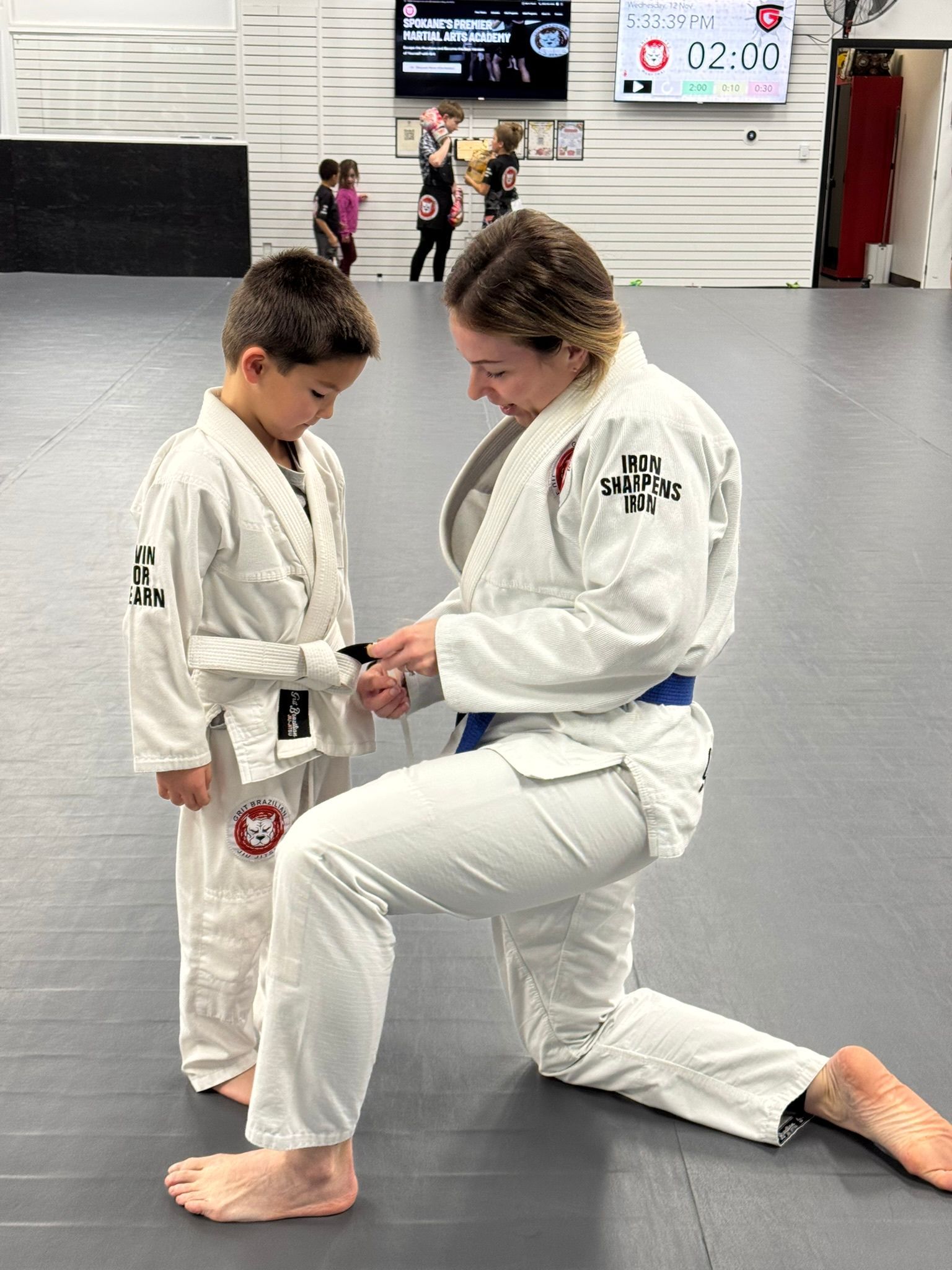
Walking into a martial arts gym for the first time can feel like a lot, especially if your child is unsure. We keep our beginner experience predictable on purpose, because predictability helps kids relax and learn faster.
A typical class includes a warm-up that builds athletic basics, technique instruction broken into small pieces, and drills that let kids practice the skill with a partner. Depending on age and experience, we may include controlled sparring games. Those games are where kids learn timing, resilience, and how to stay composed when a plan does not work on the first try. Because it will not. That is kind of the point.
We coach kids to use their voices, ask questions, and reset quickly. If your child is energetic, we channel it. If your child is quiet, we draw them out at a pace that feels safe.
Youth Jiu-Jitsu in Spokane Valley: Why the Local Fit Matters
Spokane Valley has a strong community feel, and families here tend to value activities that build character while keeping kids active. You want something that is not chaos, not a free-for-all, and not a screen. You want a positive routine with adults who hold standards.
That is the sweet spot for Youth Jiu-Jitsu in Spokane Valley. It is structured without being stiff. Kids get to be kids, but we still expect effort, respect, and attention. Over time, that combination tends to spill into the rest of the week: smoother mornings, better transitions, and fewer “I can’t” moments when something gets hard.
And yes, we also teach practical self-defense concepts in an age-appropriate way. For many parents, that matters most in terms of boundaries and anti-bullying skills: confidence, posture, awareness, and knowing what to do if someone gets hands-on.
How We Keep Youth Training Safe and Productive
Safety in kids jiu-jitsu is not an accident. It is built into the coaching, the class design, and the culture. We emphasize control over intensity, especially with new students. Kids learn that being a good training partner is a skill, and we treat it like one.
Our coaching focuses on three safety pillars:
• Clear rules and consistent supervision so kids know what is allowed and what is not
• Progressive training that matches intensity to age, size, and maturity level
• Tapping and stopping habits so children learn early that safety comes first, always
We also keep technique selection age-appropriate. The goal is skill development, coordination, and confidence, not risky moves or rough behavior. If we see a kid getting frustrated or escalating, we step in quickly and coach the moment. That is part of the value, too: learning to regulate in real time.
The Sport Is Growing, and Kids Love Having Goals
Youth jiu-jitsu has grown into a well-defined sport with rankings, large tournament ecosystems, and strong participation. Competition data from major youth events in 2025 shows large bracket sizes and submission-heavy matches, which suggests kids are not just “trying it once.” Many are sticking with it, improving, and enjoying the challenge.
That matters even if your child never competes. A healthy sport ecosystem tends to create clearer development pathways, more motivation, and more ways for kids to set goals. Some kids want belts and stripes. Some want to master a specific guard pass. Some just want to feel brave in a new room. We can work with all of that.
Do kids need to compete to benefit?
No. Competition is optional. Our job is to help your child learn, grow, and stay engaged. If your child wants to compete, we will guide that process with the right preparation and expectations. If your child does not, training still delivers the same core benefits: fitness, coordination, focus, and confidence under pressure.
Gi vs No-Gi for Kids: Two Entry Points, Same Life Skills
You may hear families talk about gi and no-gi like it is a big debate. For kids, it can be simpler: both are valuable, and both teach strong fundamentals. Gi training uses the traditional uniform, which creates more grips and a slightly slower pace, often great for learning control. No-gi removes those grips and can feel more movement-based and athletic.
Either way, Youth Jiu-Jitsu is still Youth Jiu-Jitsu: learning body awareness, leverage, balance, and composure. If you are unsure which your child will like, we help you choose based on comfort, class availability, and goals.
How Often Should Your Child Train?
Consistency matters more than intensity. Most kids do well starting with a couple of classes per week. That gives enough repetition to build confidence without feeling overwhelming. If your child loves it, adding a third day can accelerate progress, especially with coordination and conditioning.
If your schedule is busy, we understand. Many Spokane Valley families juggle work, school, and multiple activities. The key is picking a routine you can keep. When training becomes a normal part of the week, kids stop negotiating it and start owning it.
Parent FAQ: Getting Started Without Overthinking It
What age can kids start jiu-jitsu?
Many kids can start when they are ready to follow simple instructions, work with a partner, and participate safely. If you are unsure, we can help you choose the right starting point based on maturity and comfort.
Is jiu-jitsu safe for children?
It can be very safe when coaching, supervision, and class structure are done correctly. We prioritize control, tapping habits, and age-appropriate training intensity.
Will jiu-jitsu help with confidence and bullying?
Yes, in practical ways. Kids learn posture, awareness, boundary-setting, and how to stay calm under pressure. That often changes how a child carries themselves, which can reduce unwanted attention.
What should my child wear for the first class?
Comfortable athletic clothing is fine for a first visit. After that, we will guide you on what to wear for gi or no-gi based on the class and your child’s path.
How do you measure progress?
We look at more than techniques. We also track effort, focus, coachability, and how your child treats partners. Those are real life skills, and they show up fast.
What Makes Youth Jiu-Jitsu a “Mat to Life” Skill Builder
A good kids program does not just burn energy. It teaches habits. The mat is a safe place to practice things that are hard to teach in a lecture: patience, resilience, and calm problem-solving.
Here are a few “off the mat” skills we intentionally build through training:
1. Listening under pressure, because instructions still matter when a moment feels intense
2. Trying again after failure, because getting stuck is part of learning, not a reason to quit
3. Respectful communication, because partners are how you improve, not obstacles
4. Body control and balance, because safer movement reduces rough collisions and sloppy habits
5. Confidence through competence, because skill earned feels different than hype
When you look at Youth Jiu-Jitsu in Spokane Valley through that lens, it becomes more than a sport. It becomes a structured environment where kids practice becoming capable.
Take the Next Step
Building confidence and focus does not happen in a single pep talk. It happens through repetition, coaching, and a routine that makes growth feel normal. That is the heart of what we do, and it is why our Youth Jiu-Jitsu program is designed to support kids who are brand new, kids who are energetic and need structure, and kids who want a long-term sport.
If you are ready to see how this training looks in real life, we would love to welcome you in. At Grit Jiu-Jitsu & Muay Thai Martial Arts, we keep the first step simple, supportive, and focused on helping your child feel comfortable from day one.
Experience how consistent training can transform your fitness and confidence at Grit Jiu-Jitsu & Muay Thai Martial Arts.