
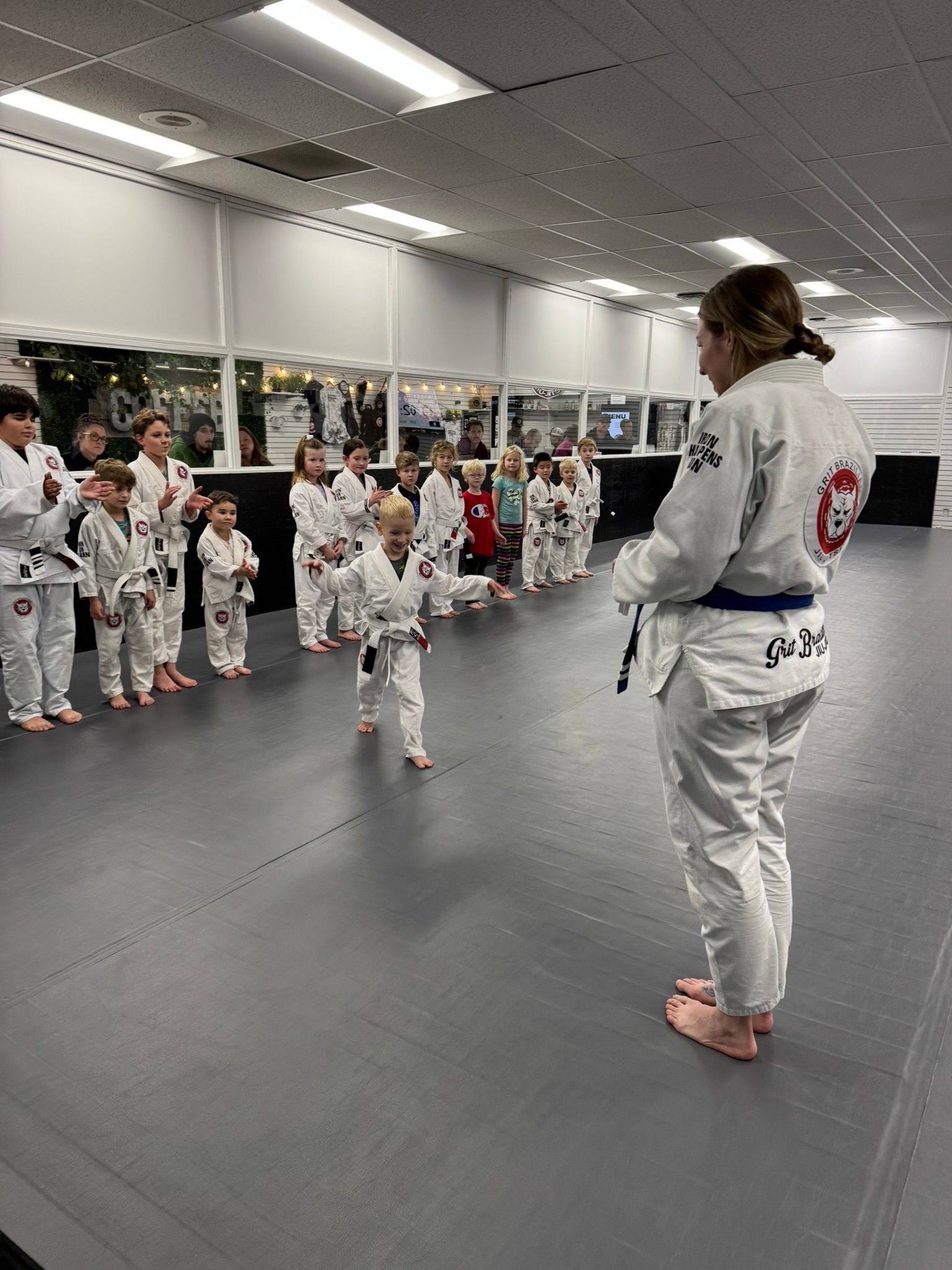
Youth Jiu-Jitsu gives kids a safe place to practice calm, courage, and “try again” energy when life feels hard.
Kids in Spokane Valley juggle a lot more than many adults realize: school expectations, social pressure, busy family calendars, and the emotional whiplash that can come with growing up. When parents look for a structured activity that helps, the goal is rarely “raise a champion.” More often, you want your child to handle frustration without melting down, listen the first time, and bounce back after a rough day.
That’s exactly why Youth Jiu-Jitsu works so well. In our classes, kids learn resilience in a hands-on way. They practice problem-solving under pressure, staying respectful even when challenged, and getting comfortable with being a beginner. That last one matters more than people think.
If you’re considering Youth Jiu-Jitsu in Spokane Valley, it helps to understand what resilience actually looks like on the mat, and how those lessons show up at home, at school, and in everyday confidence.
What resilience really means for kids (and why it’s teachable)
Resilience is not “toughness” in the sense of ignoring feelings. For kids, resilience is the ability to feel frustrated, nervous, or disappointed, and still make a good choice. It’s recovering after a mistake, taking feedback without shutting down, and trying again even when something feels awkward.
The reason Youth Jiu-Jitsu teaches resilience so effectively is that the class structure creates small, manageable challenges on purpose. A child doesn’t need to wait for a big life moment to learn grit. We can build it through repetitions, games, simple partner drills, and guided practice where the stakes are low but the learning is real.
Over time, kids start to recognize a pattern: “I can be uncomfortable and still be OK.” That belief is a powerful antidote to quitting, avoidance, and anxious spirals.
Why Youth Jiu-Jitsu in Spokane Valley fits busy family life
Spokane Valley families often want something consistent. Not just an activity to burn energy, but a routine that supports the school year. Youth Jiu-Jitsu fits well because it’s structured, predictable, and progressive. Kids know what to expect when they walk in: warm-up, skill learning, practice, and a clear start and finish.
That consistency helps kids who feel a little scattered after school. It also helps parents because progress in jiu-jitsu isn’t vague. You’ll notice improvements in posture, attention, and self-control long before a child can explain what an “armbar” is.
And because Jiu-Jitsu in Spokane Valley is in demand, many families are already familiar with the idea that grappling arts can build confidence and discipline. Our job is to make those benefits practical, safe, and age-appropriate, especially for kids who are new to organized training.
How we teach calm under pressure without encouraging aggression
A common parent worry is: “Will this make my kid more aggressive?” It’s a fair question. Our answer is that Youth Jiu-Jitsu is built around control, not chaos. The entire practice is about managing intensity, using technique over force, and respecting partners so everyone can train.
We coach kids to pause and think. When a child feels stuck in a position, we teach them to breathe, frame, and work step by step. That moment, right there, is emotional regulation training. It’s a calm, coached version of pressure that kids can learn from.
We also reinforce that jiu-jitsu is for safety and confidence, not showing off. Respectful behavior is not a side note in class. It’s part of what gets practiced every session, the same way movement skills do.
What kids learn in a typical class
Resilience is the headline, but it’s supported by a lot of nuts-and-bolts skill building. Our kids program is designed to help children build movement, balance, coordination, focus, listening skills, and a calm attitude toward challenges. Those pieces stack together over time.
Here’s what many kids start developing as they train consistently:
• Body awareness and coordination through basic movement drills like shrimping, bridging, and controlled rolls
• Focus and listening skills because techniques require step-by-step attention and follow-through
• Cooperation and respect by learning how to be a safe training partner and how to take turns
• Confidence through steady progress, even when progress looks small from the outside
• Emotional resilience by practicing how to lose, reset, and re-engage without embarrassment
• Self-control because the goal is technical success, not overpowering someone
This is also why Youth Jiu-Jitsu can be a great fit for kids who don’t love traditional team sports. The wins are personal: “I remembered the steps,” “I stayed calm,” “I tried again.”
Resilience lesson 1: Getting comfortable being a beginner
Most kids want to be good at something immediately. Jiu-jitsu politely refuses to work that way. Early on, almost every child experiences the same thing: they try a move, it doesn’t work, and they feel a flash of frustration.
We treat that moment as training, not trouble. We normalize mistakes. We coach kids to ask questions, to try the technique again, and to notice small improvements. That’s resilience in real time: staying engaged when something doesn’t click yet.
As weeks go by, you’ll often see a shift at home. Kids become more willing to tackle homework, practice an instrument, or handle corrections from teachers because they’ve had repeated proof that effort leads somewhere.
Resilience lesson 2: Learning to “tap” and reset
One of the most unique parts of Youth Jiu-Jitsu is learning to tap. Tapping is a safety signal that ends a hold immediately. It teaches kids a lesson that’s surprisingly mature: you can stop, communicate clearly, and try again without drama.
Kids also learn that tapping is not losing. It’s feedback. It’s part of learning. That mindset can be life-changing for perfectionist kids, and it’s calming for anxious kids who need to know there’s a clear way to stay safe.
In class, tapping becomes a reset button. At school, that reset can look like taking a breath after a mistake, asking for help, or walking away from a conflict instead of escalating it.
Resilience lesson 3: Bully prevention through posture, voice, and boundaries
Parents often search Youth Jiu-Jitsu in Spokane Valley because bullying is on their mind. While we do teach practical self-defense fundamentals, the bigger bully-prevention impact usually happens earlier: confidence in body language, confidence in eye contact, and confidence in speaking clearly.
We coach kids to carry themselves with awareness. We also teach that the best outcome is avoiding harm, not proving something. That means learning boundaries, using a strong voice, and getting help from trusted adults when needed.
When kids feel capable, they tend to act less like targets. That’s not a guarantee, but it is a meaningful shift. And it’s one that parents can see in the way a child walks into a room.
Is jiu-jitsu safe for kids?
Safety is not accidental. It’s built into how we structure class and how we teach partner work. Youth Jiu-Jitsu is beginner-friendly because it emphasizes technique, control, and repetition rather than size or strength alone.
We keep training age-appropriate and closely supervised. Kids learn foundational movement first, then simple positions, then basic escapes and control. We also set clear expectations for respectful behavior and safe intensity. If a child is overly rough, that becomes a coaching moment, not something we ignore.
No sport is zero-risk, but jiu-jitsu can be practiced in a controlled way that prioritizes long-term learning. For many families, that balance of challenge and safety is exactly what makes it a good fit.
What age should kids start, and how are classes grouped?
Many youth programs in the area serve multiple age ranges, and we do the same because kids develop at different speeds. In general, kids can begin once they can follow simple directions, stay with a group, and participate safely with partners.
We typically see strong success with elementary-aged kids and up, including age ranges similar to 6 to 8 and 9 to 14. What matters most is not “being athletic.” What matters is readiness to listen, try, and keep hands and feet controlled.
If you’re unsure, a trial class is the easiest way to find out. Kids usually tell you pretty quickly whether the environment clicks.
How often should your child train each week?
Consistency beats intensity, especially for kids. Most families start with 2 classes per week. That’s enough repetition to build skills and confidence without overwhelming a school schedule.
From there, you can adjust based on your child’s energy, attention span, and goals. If your child loves it and wants more mat time, adding a third day can accelerate learning. If your calendar is tight, one day a week can still be beneficial, but progress will feel slower.
The best plan is the one your family can maintain for months, not just for a burst of motivation.
What to expect at a first class (and what to wear)
First classes should feel organized, welcoming, and clear. We keep the tone upbeat but structured, because kids relax when they know what’s coming next.
A typical first experience includes:
1. A guided warm-up that builds balance, coordination, and safe movement habits
2. One or two simple techniques taught in kid-friendly steps
3. Supervised drilling with a partner, with plenty of coaching and resets
4. A game or controlled activity that reinforces the lesson without chaos
5. A short wrap-up that highlights effort, respect, and progress
For what to wear, comfortable athletic clothes are fine for day one. If your child continues, we’ll help you understand uniform options and what works best for safe training. If you have questions, the website and the class schedule page make it easy to plan ahead.
Is Youth Jiu-Jitsu good for shy, anxious, or high-energy kids?
Yes, and not because we expect kids to change overnight. Jiu-jitsu gives kids a role and a structure. Shy kids don’t have to perform socially to succeed. They can focus on the steps, the drills, and the small wins. Over time, confidence tends to rise naturally because competence rises.
For anxious kids, the predictable routine and clear rules help. Learning how to breathe under pressure, how to reset after a mistake, and how to communicate with a partner can be grounding.
For high-energy kids, the mat is a healthy outlet. But we also coach control. The goal is not just “tired out.” The goal is “regulated.” That’s a different outcome, and it usually carries over into home life in a really welcome way.
Take the Next Step
Building resilience isn’t a one-time lesson. It’s a skill your child practices, little by little, in an environment that’s challenging but supportive. That’s what we aim to provide every day: a structured path where kids can grow stronger physically, steadier emotionally, and more confident socially.
If you want Youth Jiu-Jitsu that prioritizes calm under pressure, respectful behavior, and real progress, our team at Grit Jiu-Jitsu & Muay Thai Martial Arts in Spokane Valley, WA would be glad to help you get started and find the right class fit for your child.
Step onto the mats with confidence and start learning Brazilian Jiu-Jitsu at Grit Brazilian Jiu-Jitsu & Muay Thai.